This website forms the ongoing archive of Deep Time Agency and is always under construction.
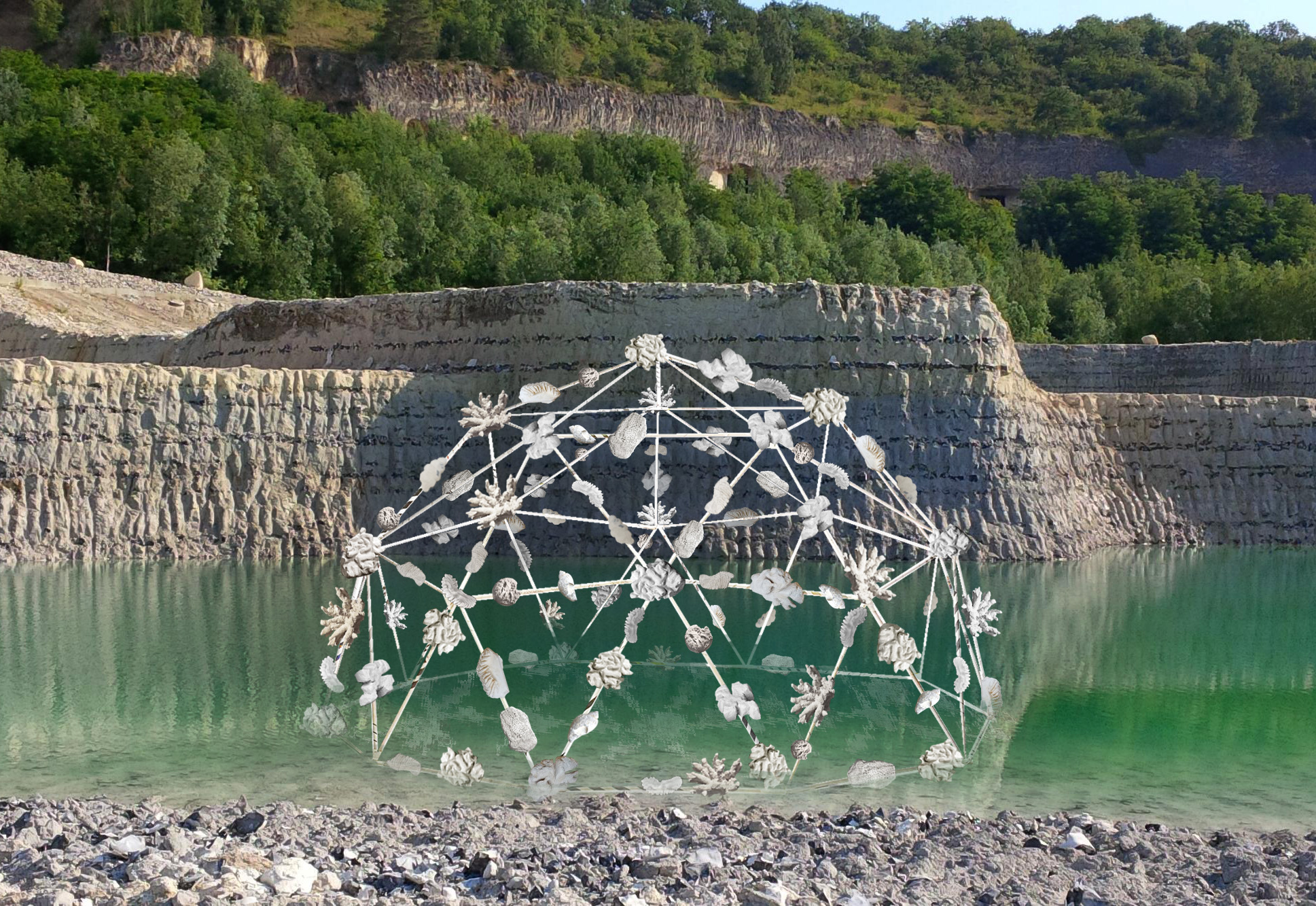
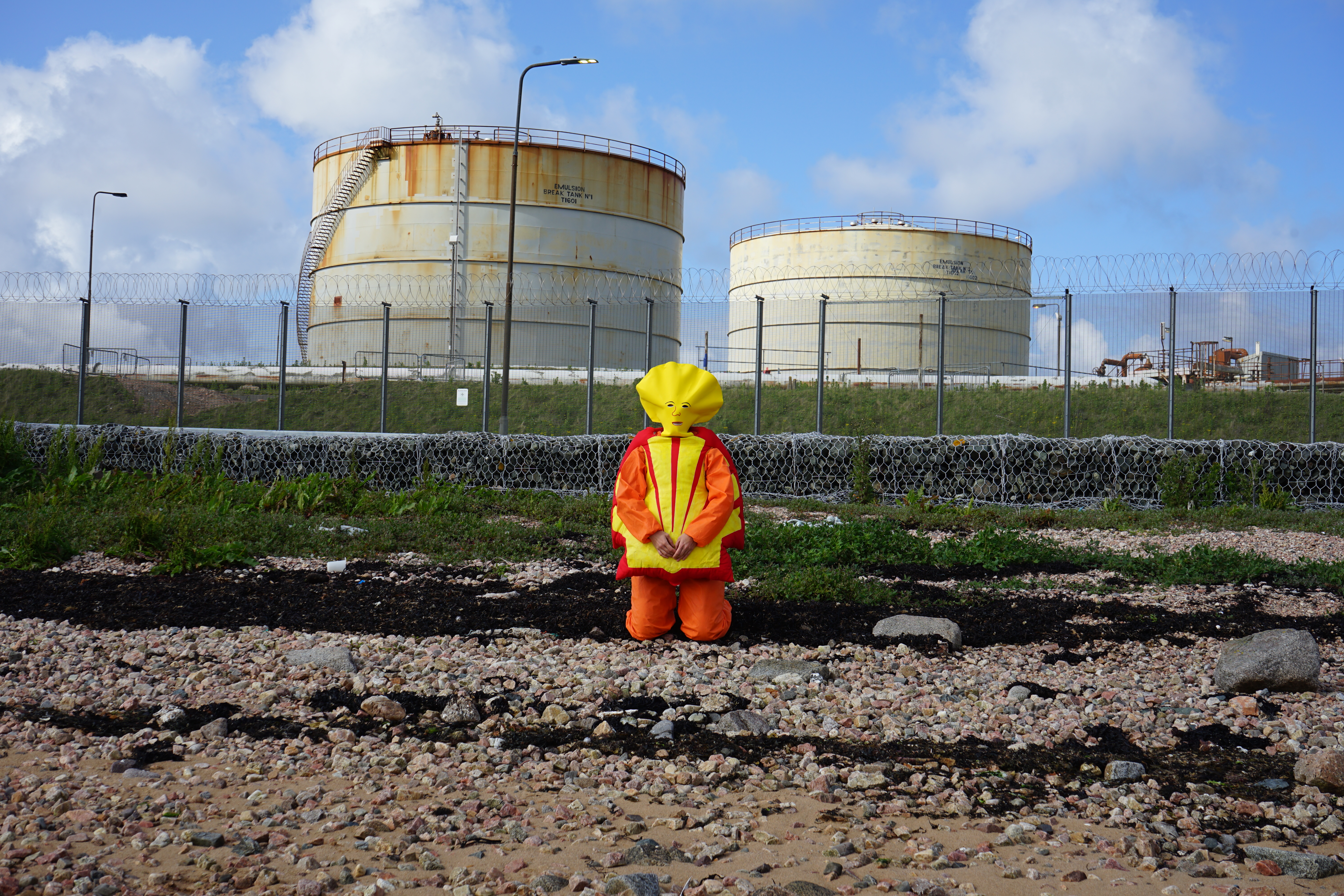
Deep Time Agency is an artistic research initiative that recontextualizes archaeological and historical objects in industrially-changed landscapes.
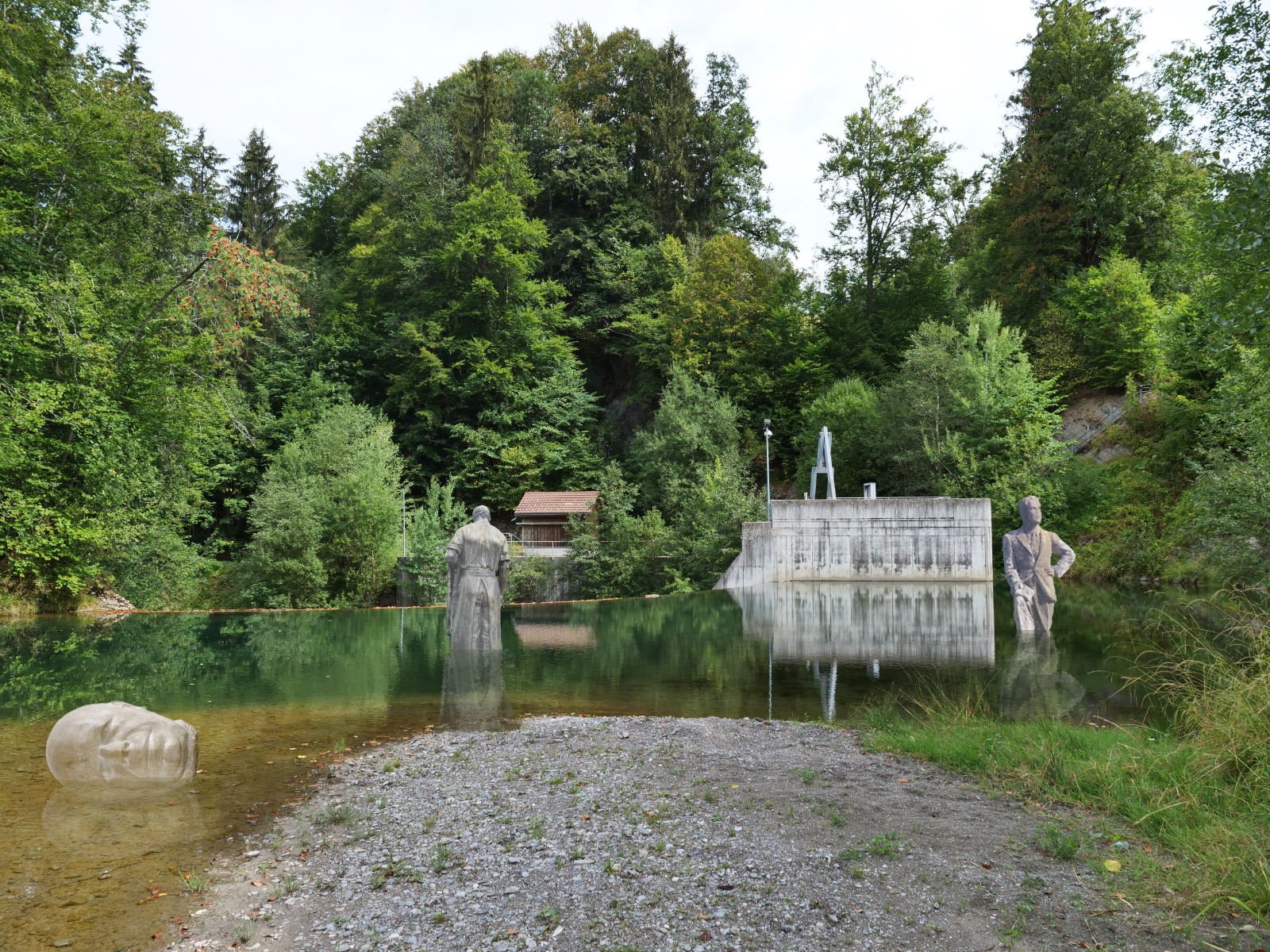
By highlighting objects exposed by or related to industrial excavations, we seek to develop a sense of belonging in the disrupted landscapes themselves and in the Anthropocene.



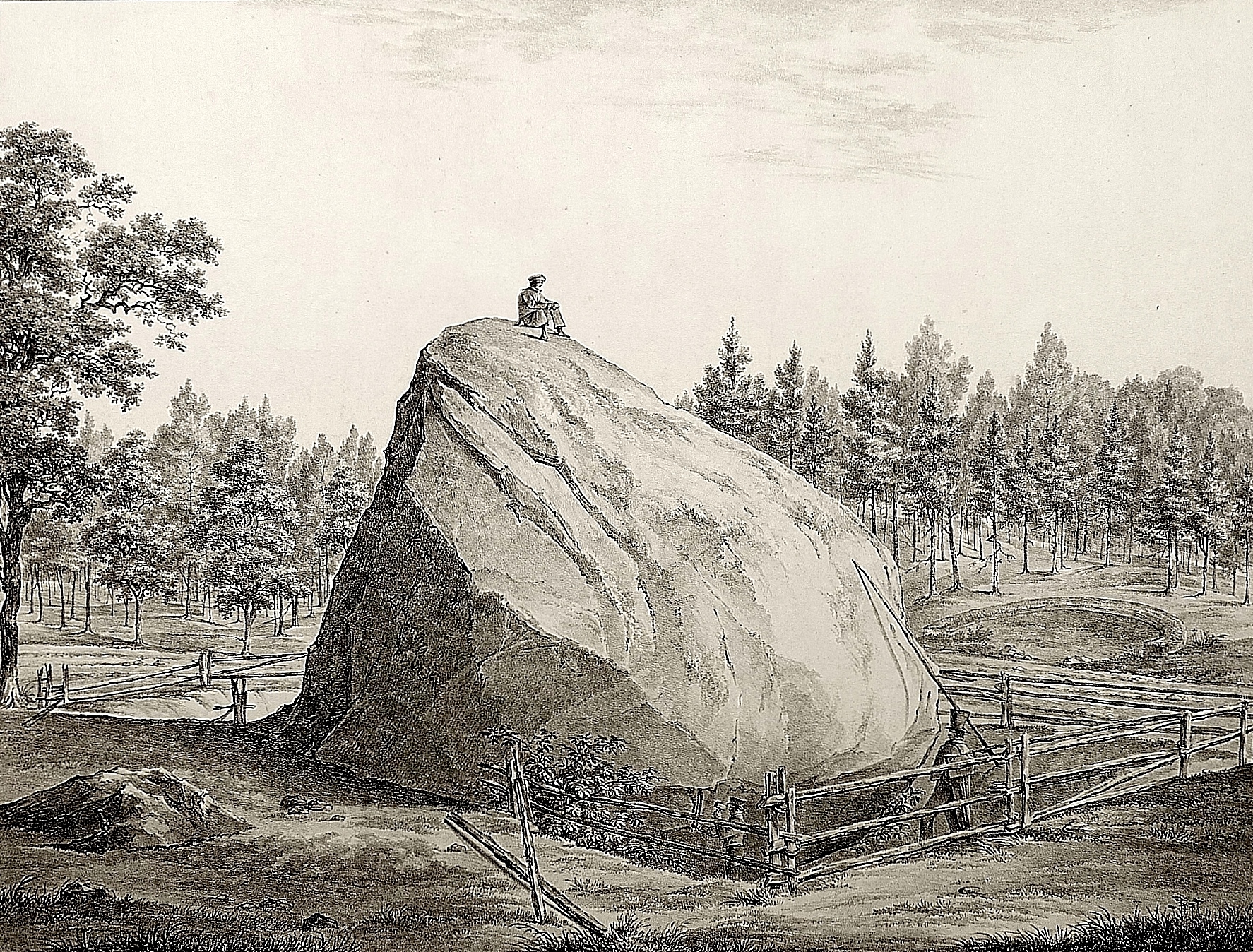
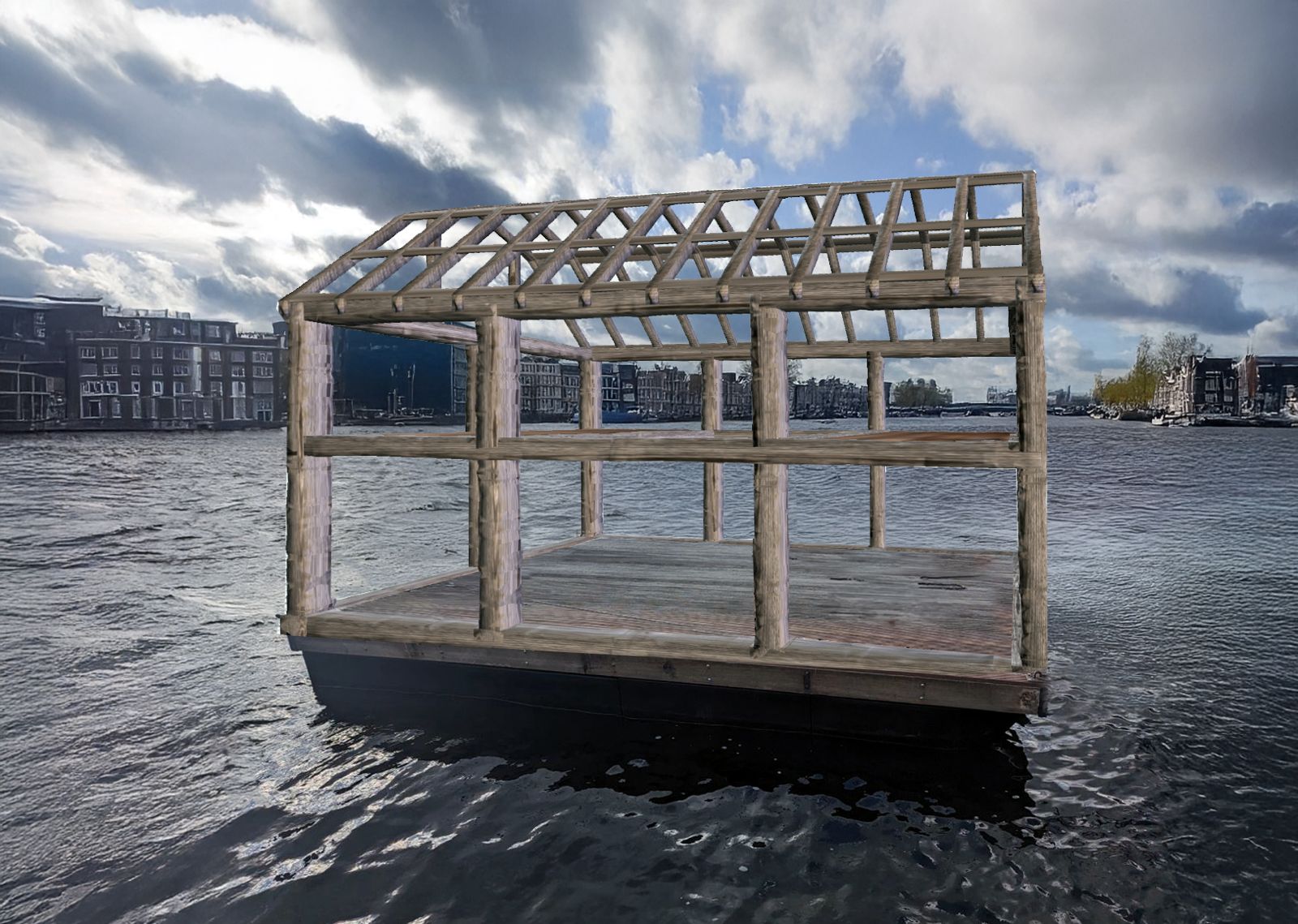
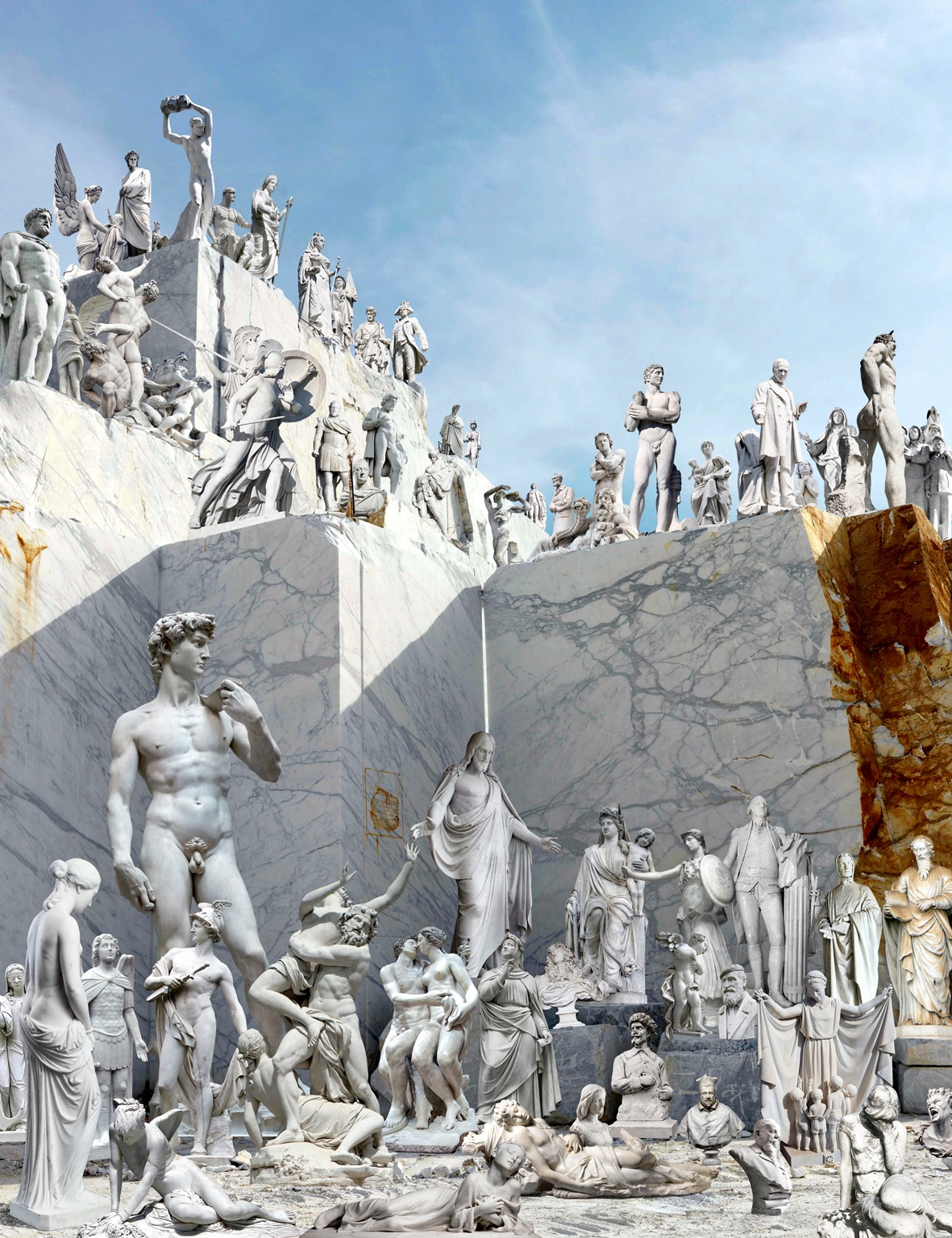
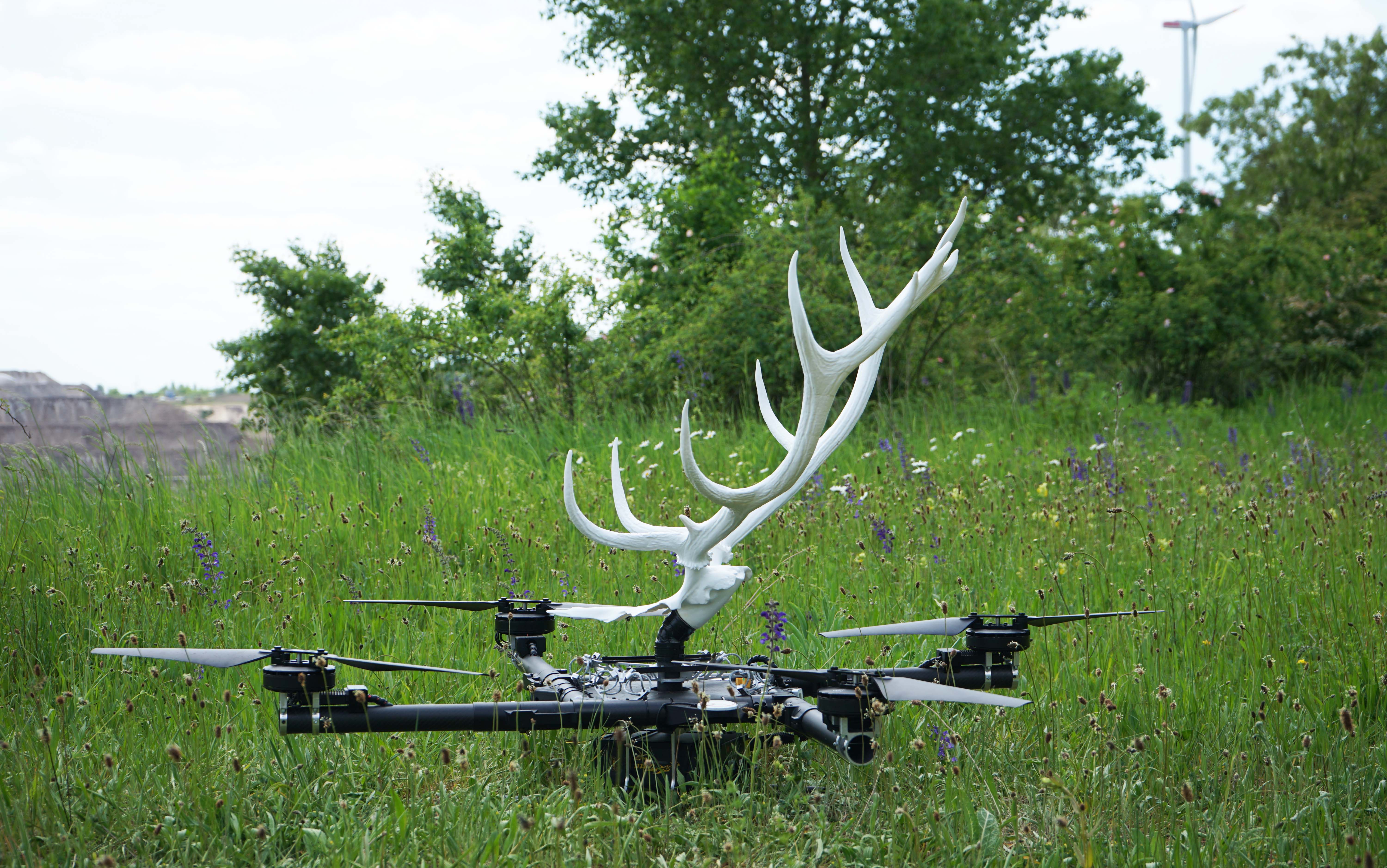
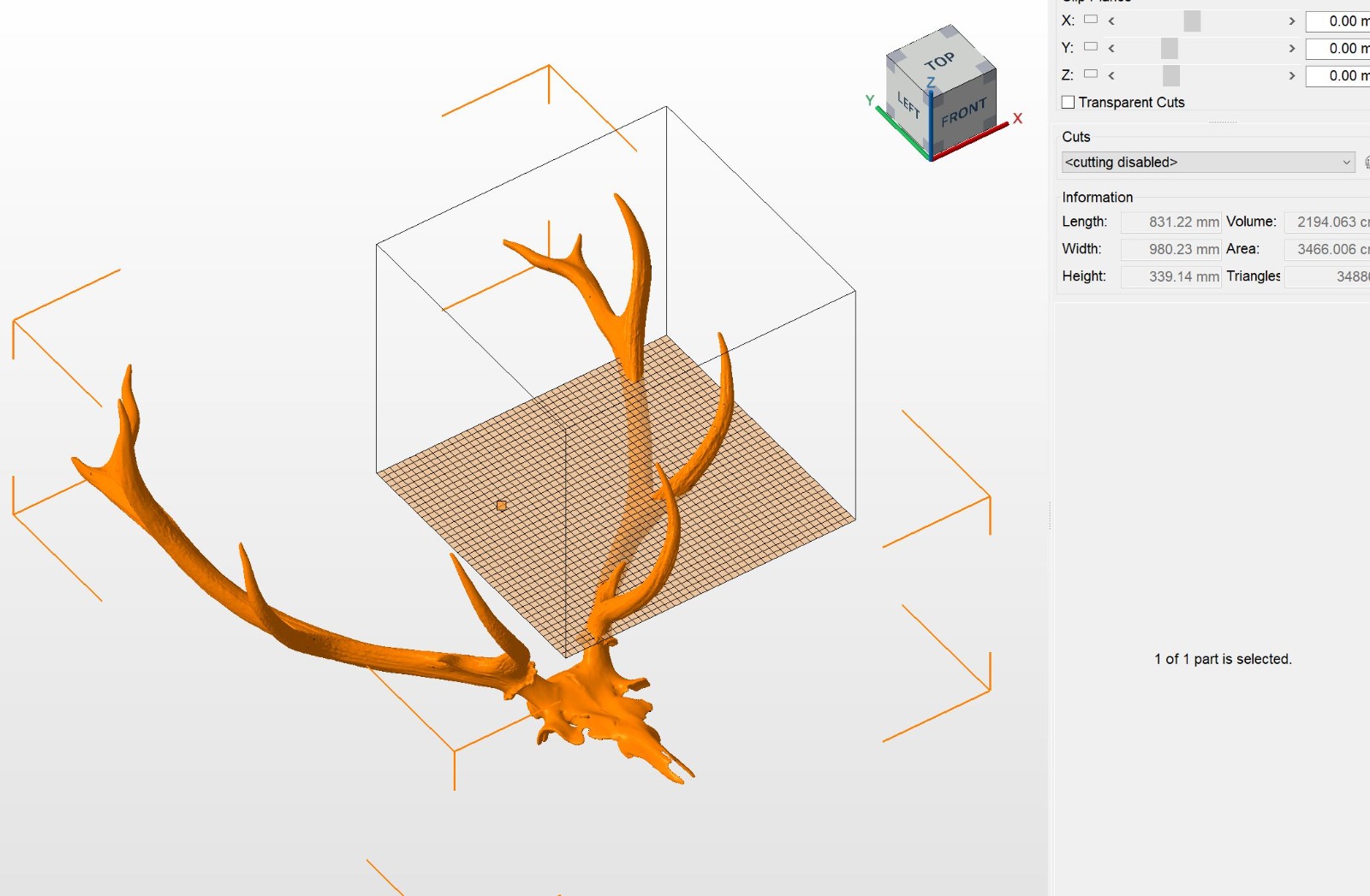
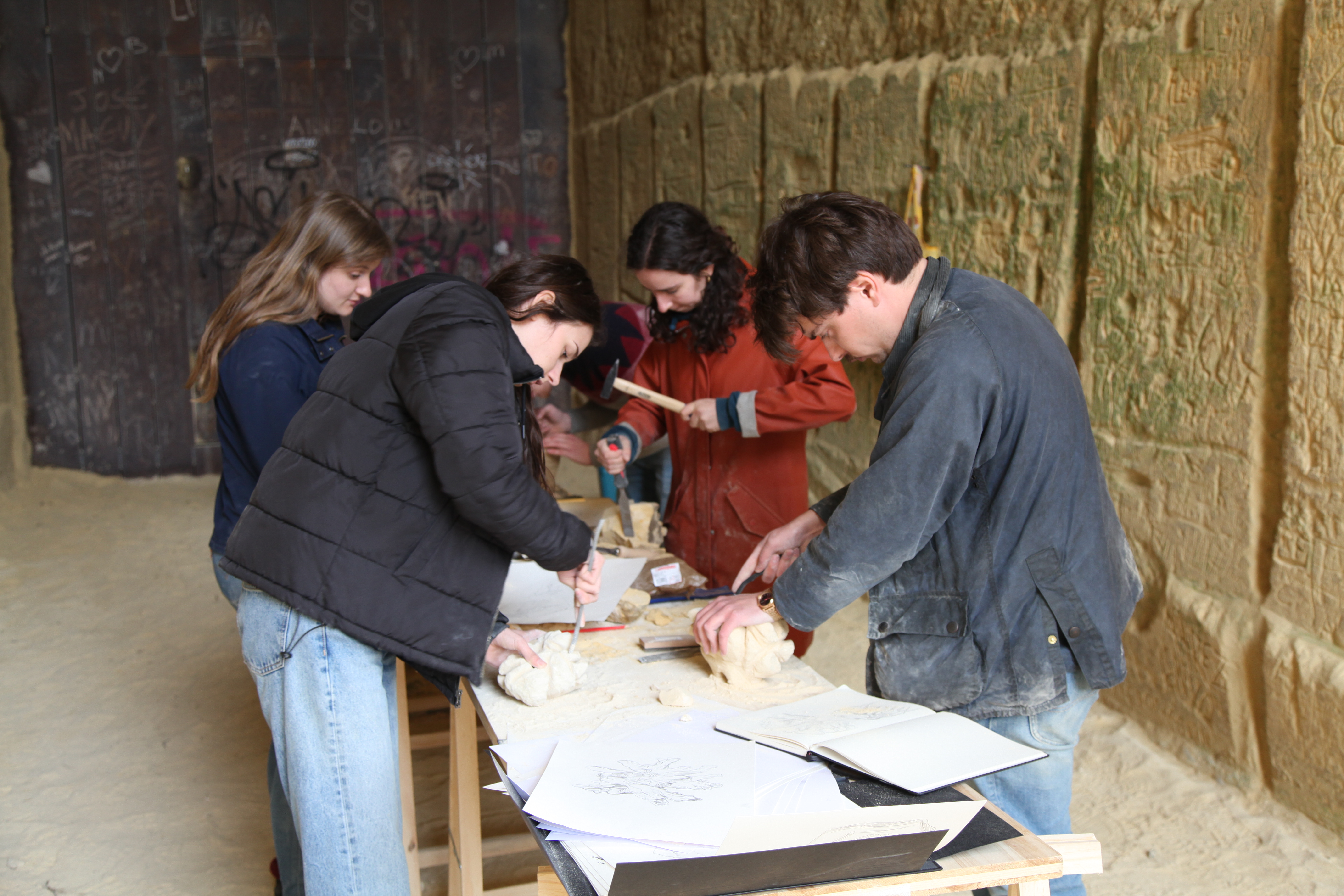
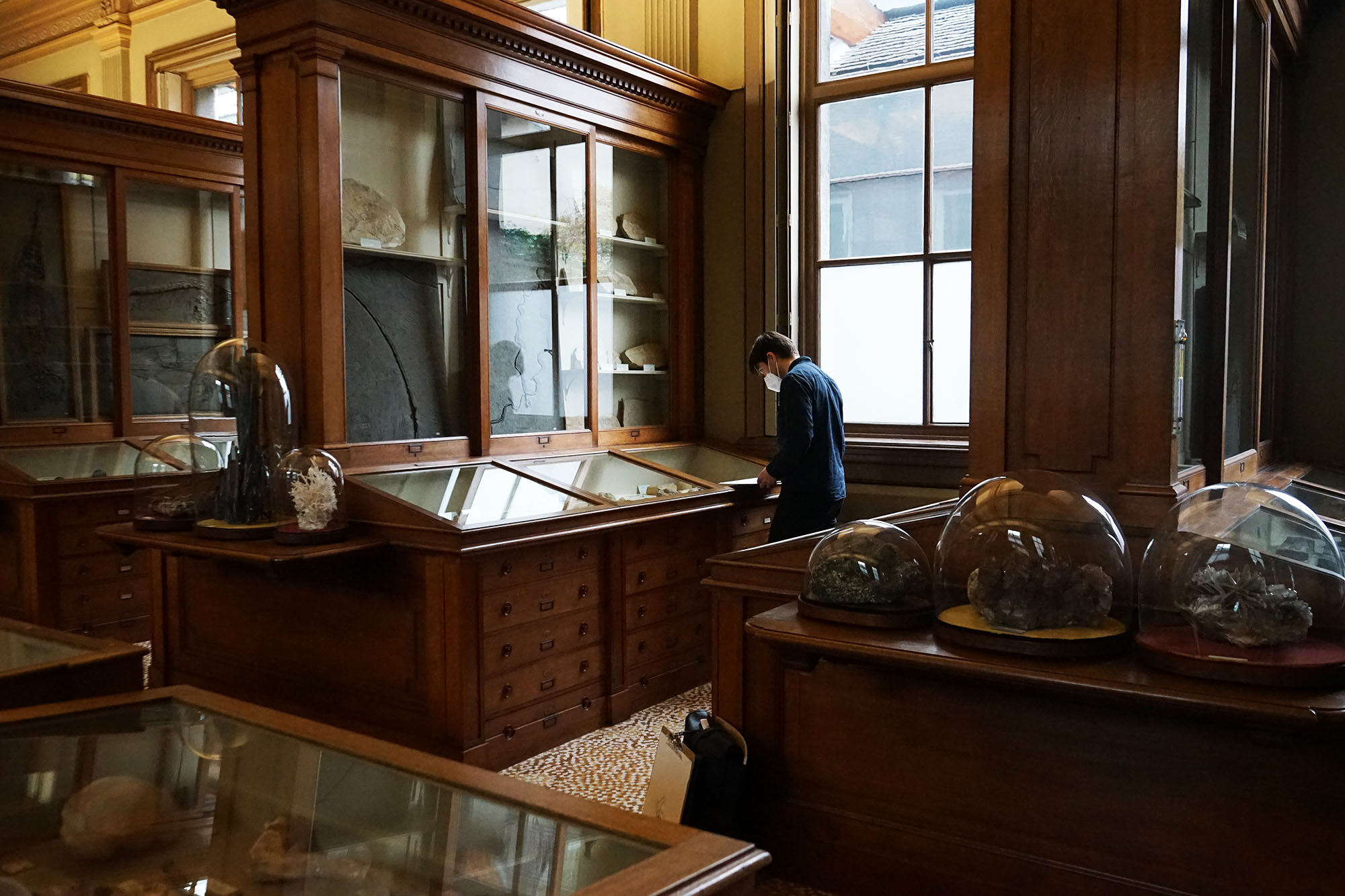
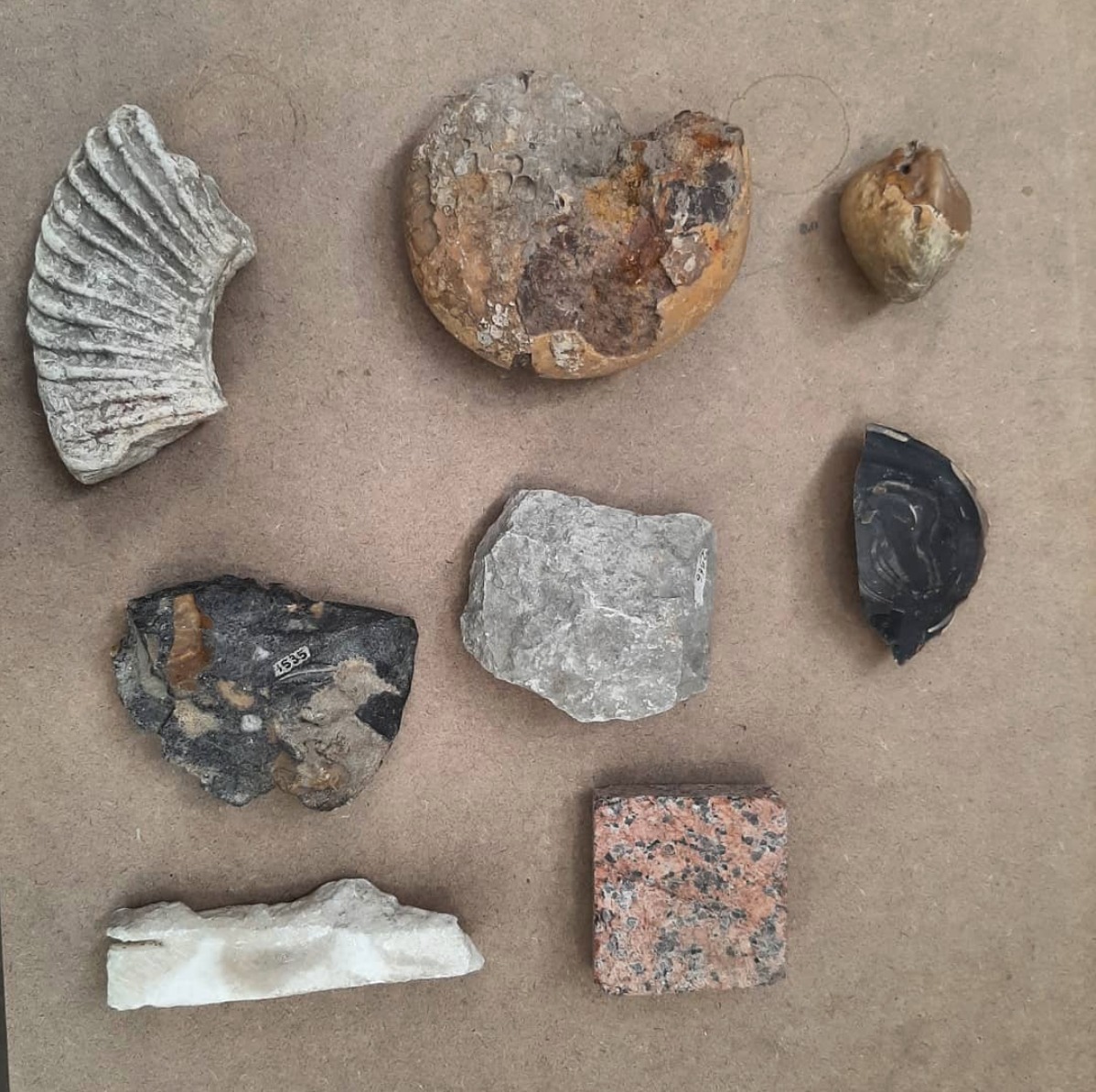


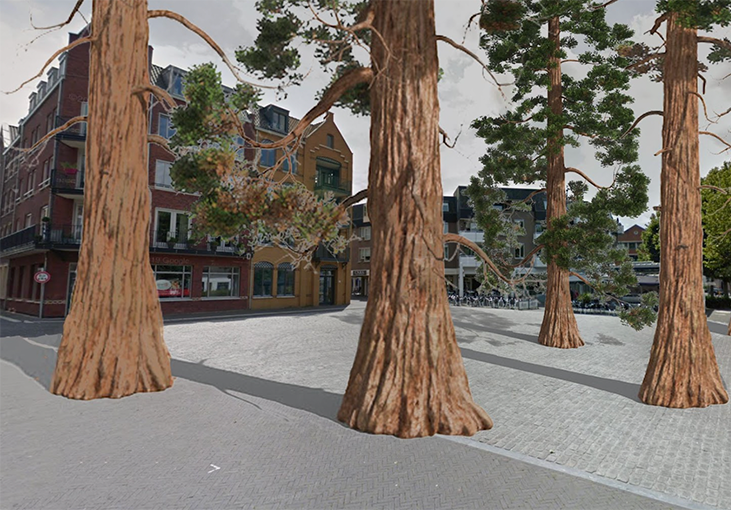
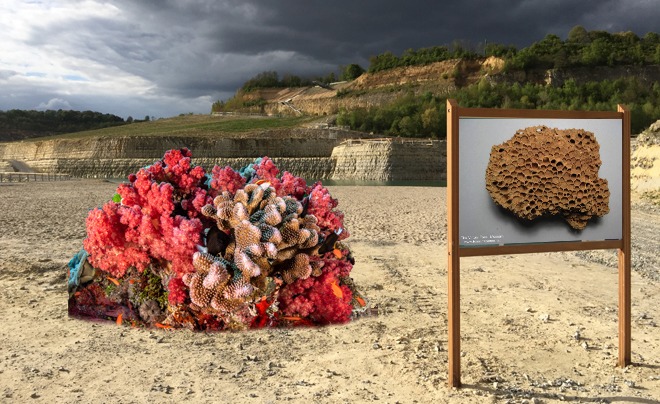

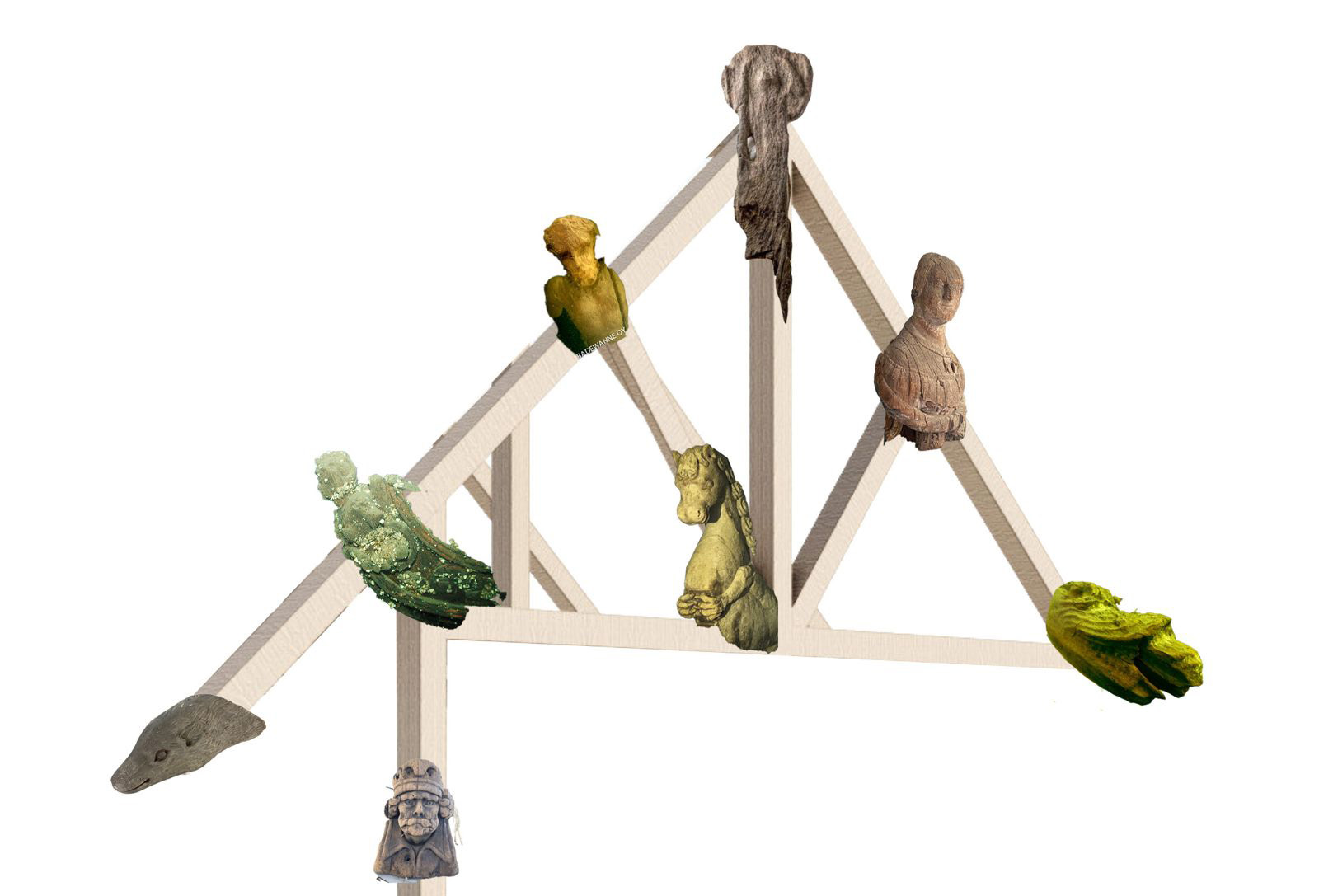
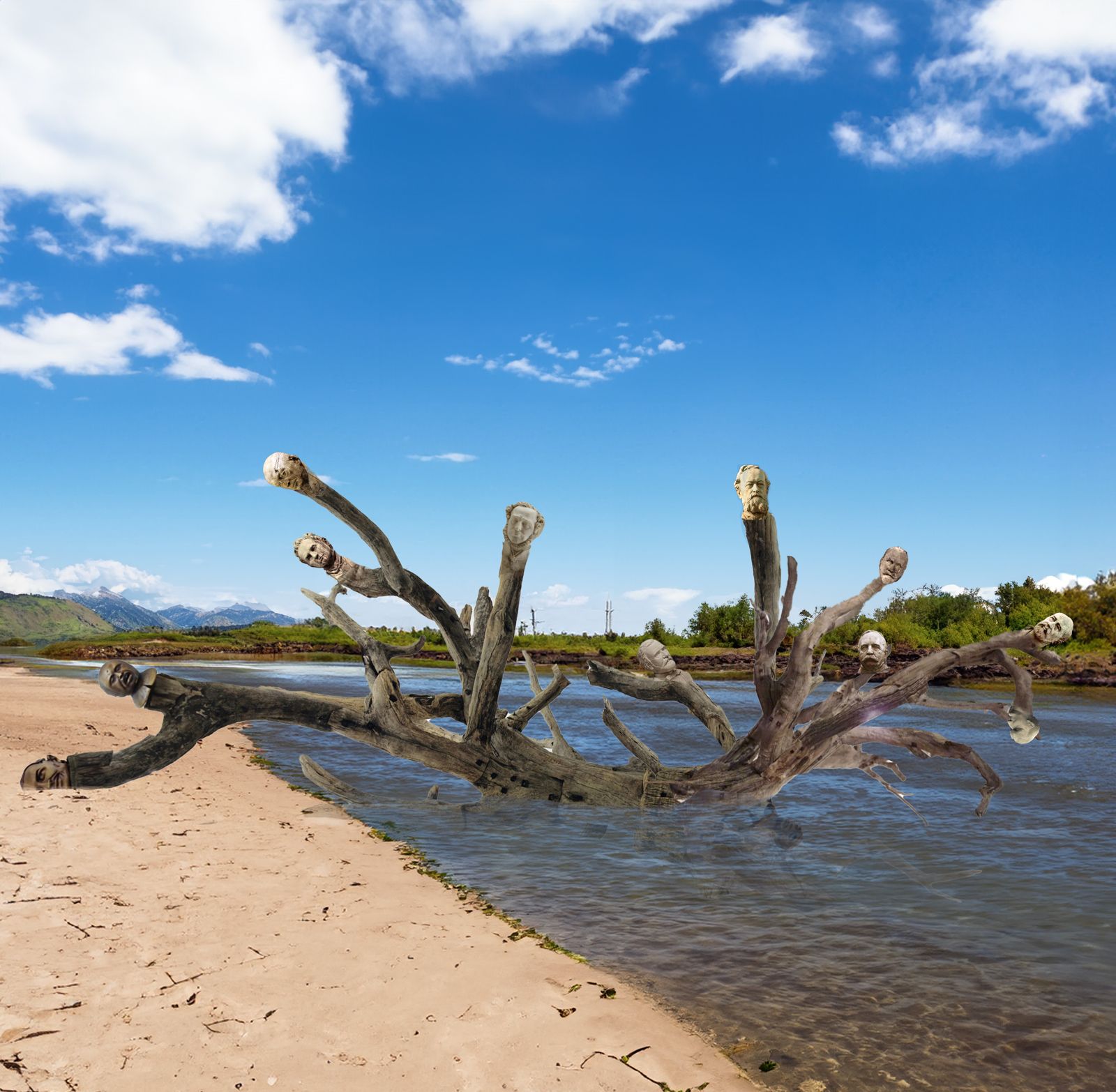
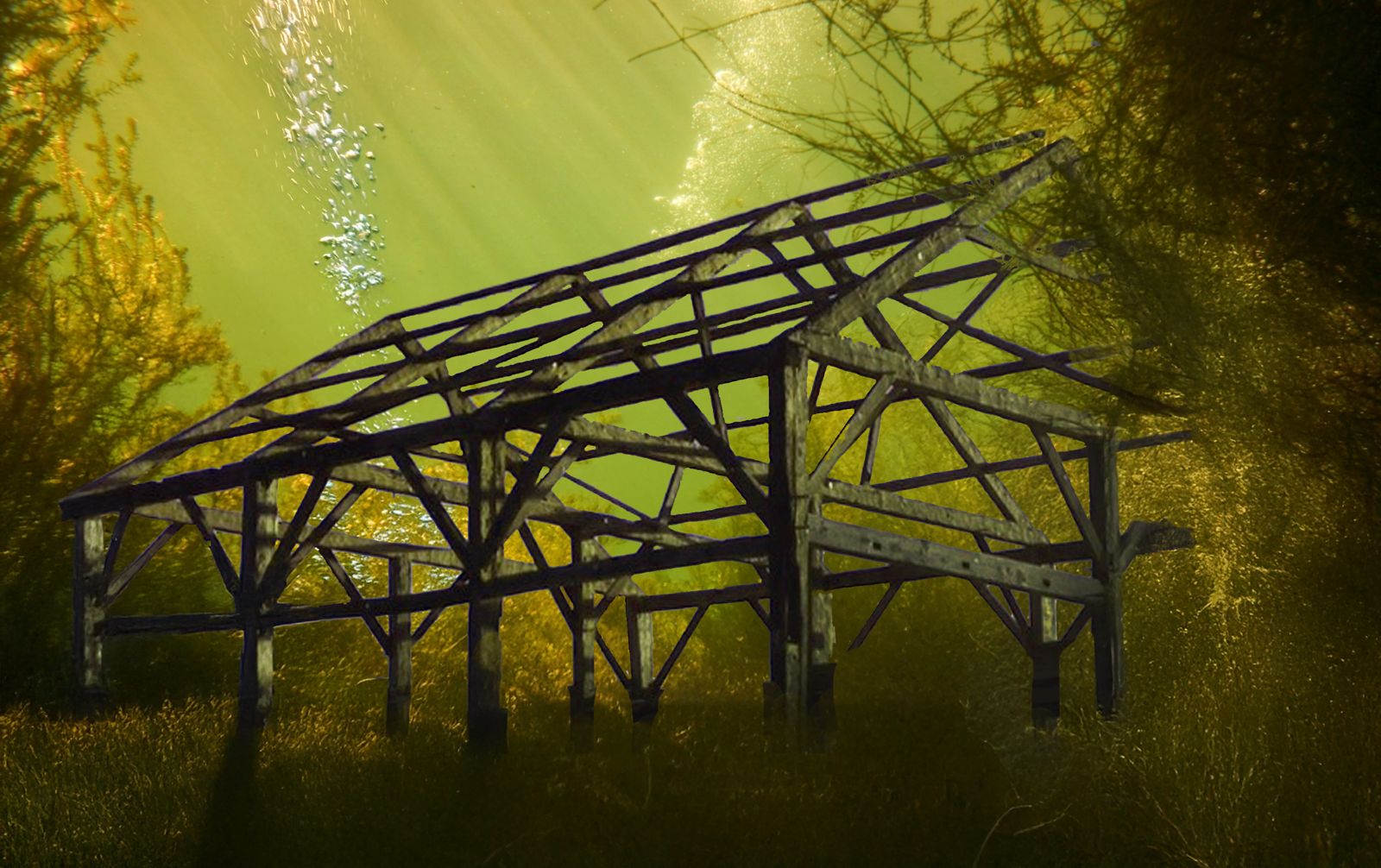
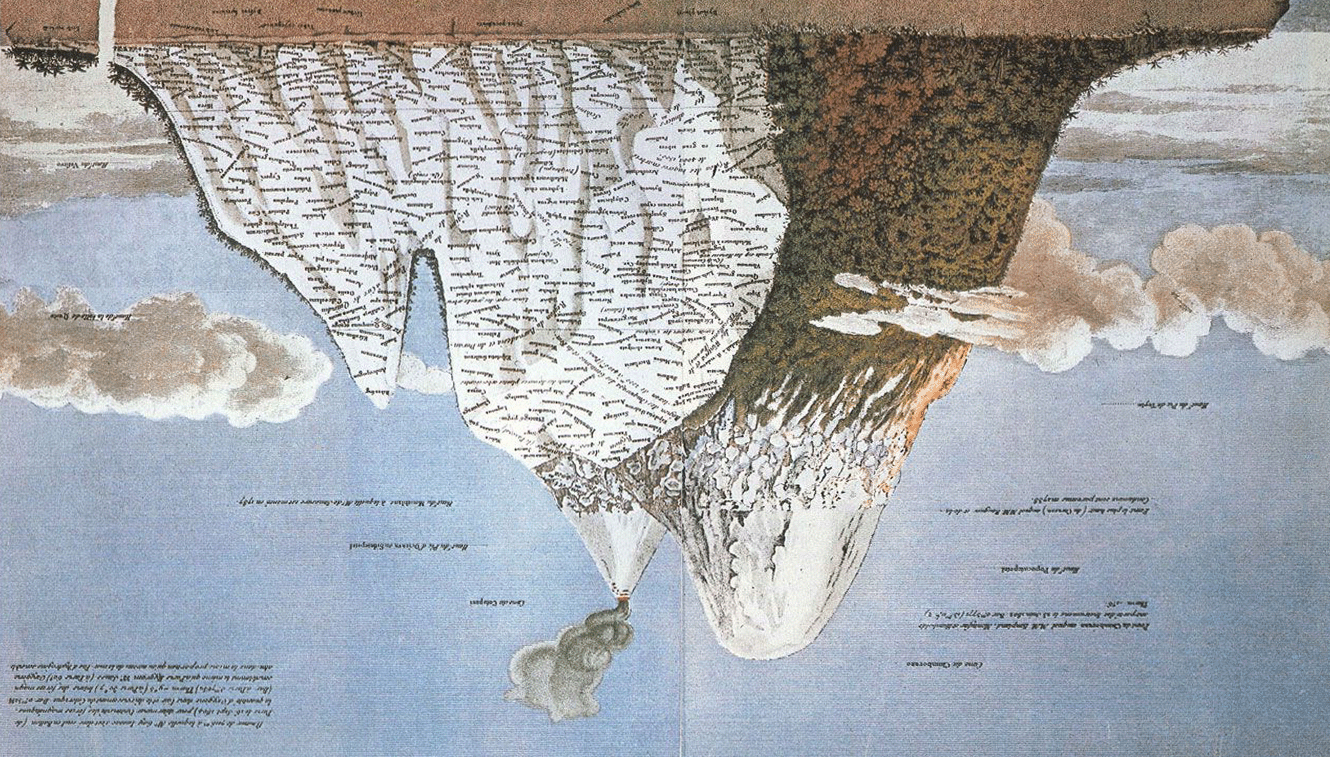 Alexander von Humboldt - Ideen zu einer Geographie der Pflanzen. Tübingen 1807, reimagined
as quarry.
ABOUT
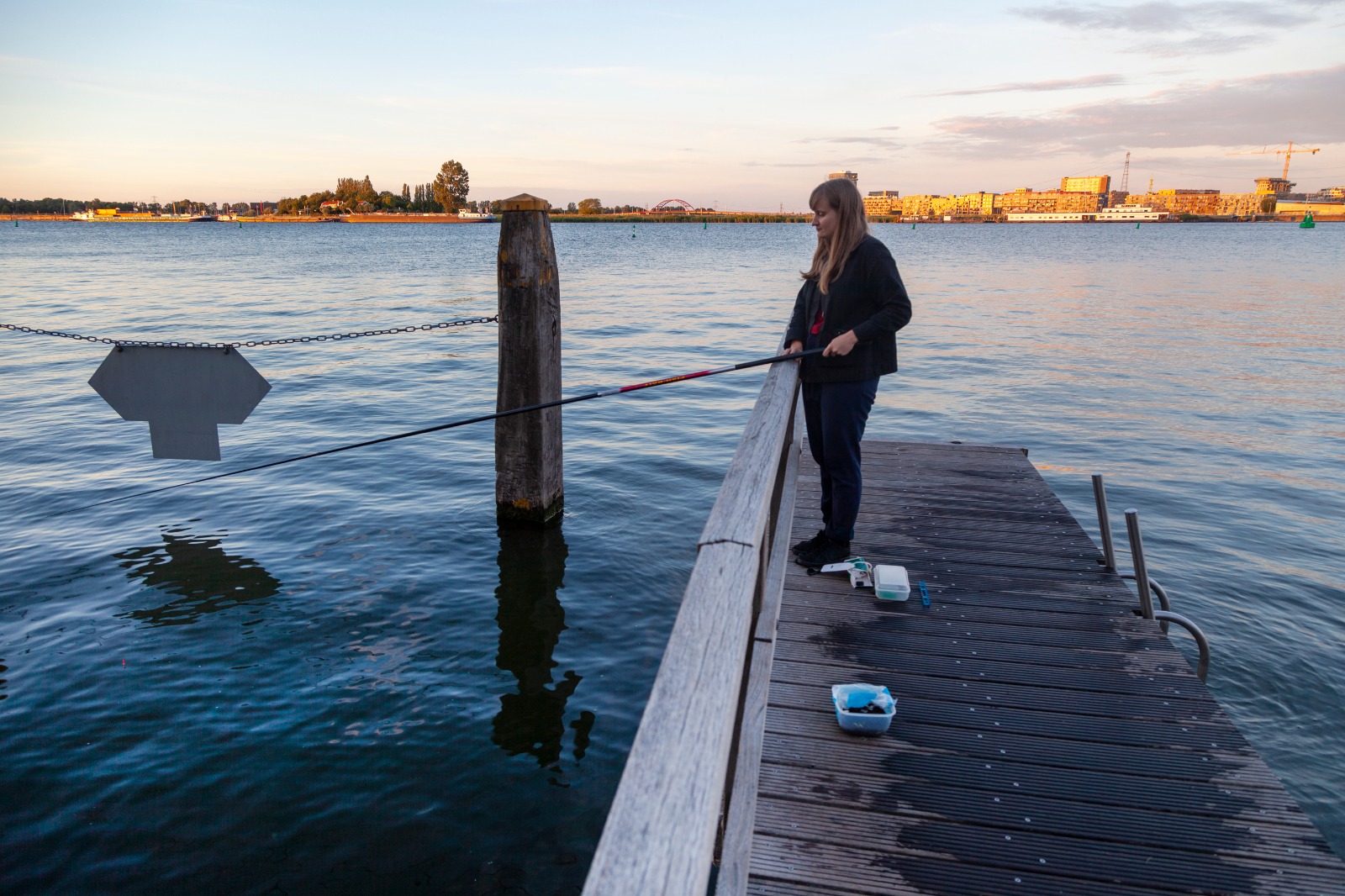
In 2020, visual artists Miriam Sentler and Wouter Osterholt set up an interdisciplinary research initiative: Deep Time Agency.
DTA is designed as a multi-year research project with different case studies in a variety of industrially-changed landscapes, wherein we recontextualize archaeological and historical objects in collaboration with residents, stakeholders, and institutions.
Our projects deal with the complex question of how old relationships to land and material might still resonate within contemporary society. We are not interested in nostalgia, but in creating situations where imagination and collective participation can open new ways of relating to (post)industrial environments.
In a time marked by ecological, social, and political crises, our artistic work asks how performative interventions and collective rituals might help in shaping new ways of relating to the landscapes we are fundamentally part of.


Locations visited with Pieth:
- Birth House Eugéne Dubois, Breusterstraat, Eijsden (NL)
- Museum het Ursulineconvent, Eijsden (NL)
- Teylers Museum Haarlem (NL)
- Natural Biodiversity Center Leiden (NL)
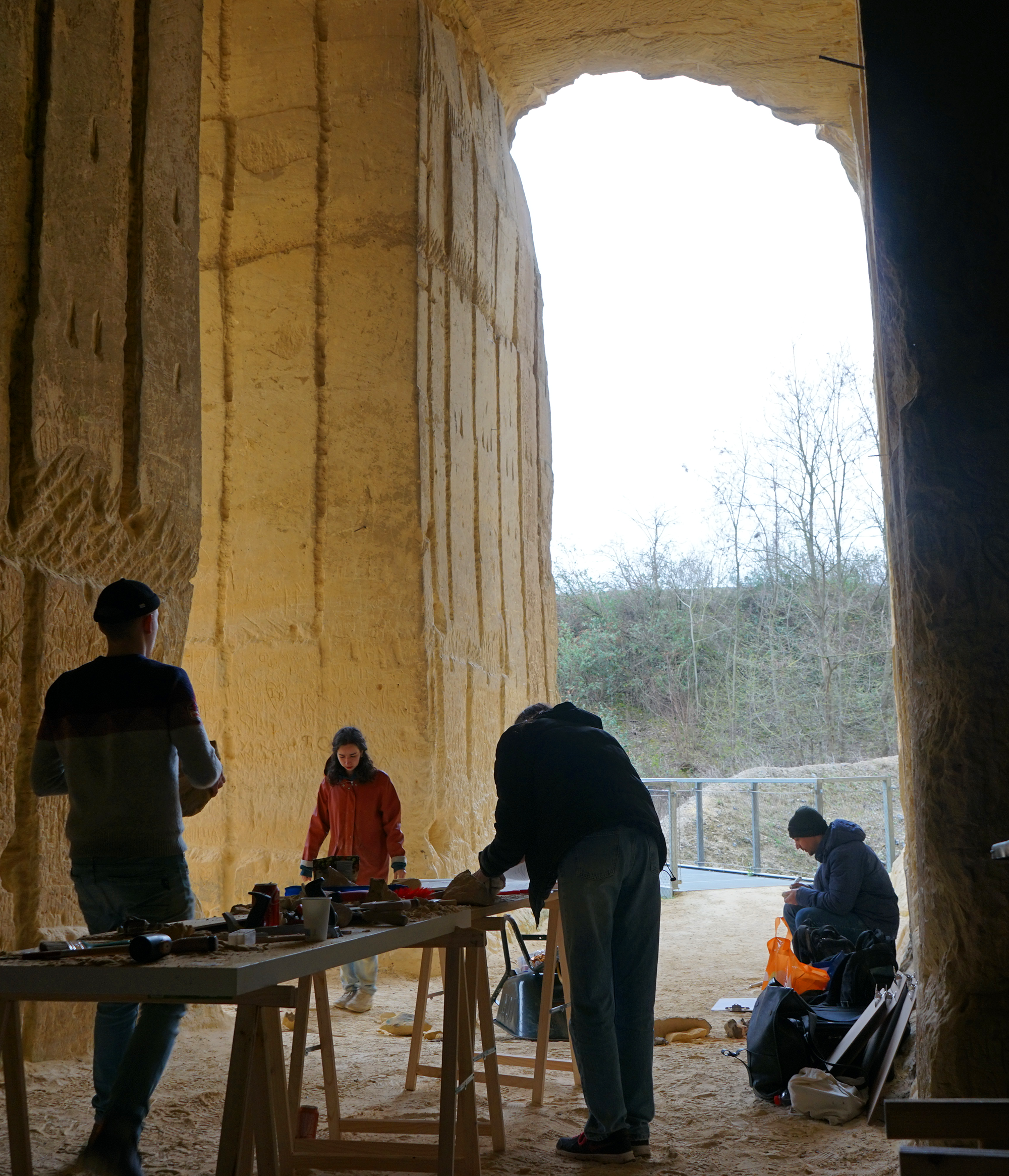
- ENCI Maastricht (NL)
- Cemetery Venlo (NL)
09. The Giant’s Bones (2024-27)
Location: The Netherlands and Java, Indonesia
Sculpture, performative intervention, analogue photography, audio installation (forthcoming)
Commissioned by Odapark Venray (NL)
Generously funded by the Mondriaan Fonds
The Giant’s Bones builds on DTA’s earlier project Swamp Palace (2022), which explored the botanical work of paleoanthropologist Eugène Dubois (1858-1940) in North Limburg. This new project turns to another chapter of his legacy: the fossil discoveries he made in the former Dutch East Indies, now Indonesia, that brought him international recognition and continue to raise urgent questions about colonial history and restitution.
In 2022, the Indonesian government announced its claim for the return of some 40,000 fossils, including the world-famous remains of Java Man, once described as the “missing link” between apes and humans. Discovered by Dubois in Java in the late nineteenth century, these fossils had symbolic meaning for the local community, who believed that they were the remains of a mythical battle between giants. Dubois took the ‘giant bones’ with him and shipped them to the Netherlands in approximately four hundred crates. Today, they form part of a collection held by Naturalis Biodiversity Center in Leiden, one of the largest collections of Indonesian fossils in the world.
Location: The Netherlands and Java, Indonesia
Sculpture, performative intervention, analogue photography, audio installation (forthcoming)
Commissioned by Odapark Venray (NL)
Generously funded by the Mondriaan Fonds
The Giant’s Bones builds on DTA’s earlier project Swamp Palace (2022), which explored the botanical work of paleoanthropologist Eugène Dubois (1858-1940) in North Limburg. This new project turns to another chapter of his legacy: the fossil discoveries he made in the former Dutch East Indies, now Indonesia, that brought him international recognition and continue to raise urgent questions about colonial history and restitution.
In 2022, the Indonesian government announced its claim for the return of some 40,000 fossils, including the world-famous remains of Java Man, once described as the “missing link” between apes and humans. Discovered by Dubois in Java in the late nineteenth century, these fossils had symbolic meaning for the local community, who believed that they were the remains of a mythical battle between giants. Dubois took the ‘giant bones’ with him and shipped them to the Netherlands in approximately four hundred crates. Today, they form part of a collection held by Naturalis Biodiversity Center in Leiden, one of the largest collections of Indonesian fossils in the world.
As discussions about repatriation take shape in the Netherlands, fundamental questions remain open. What does the return of these fossils mean for Indonesia and the Netherlands? Who has the right to care for, study, interpret, and tell the stories of these remains? And how might a colonial scientific legacy be reconsidered in the present? While an advisory committee in The Hague addressed questions of restitution and has started returning fossils to Indonesia, our art project seeks to bring these questions into the public realm, creating space for perspectives that extend beyond the museum and the academic world.
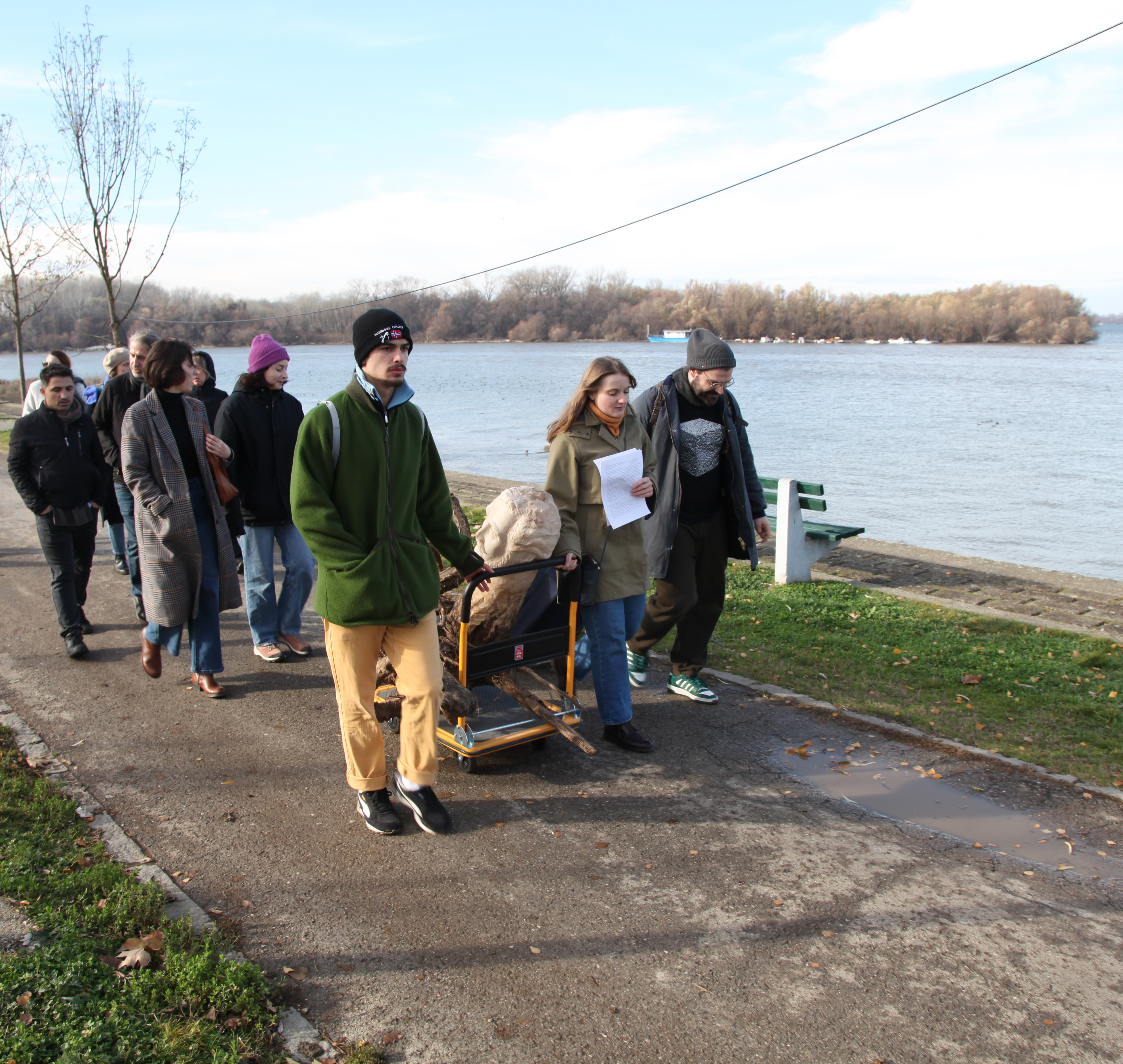
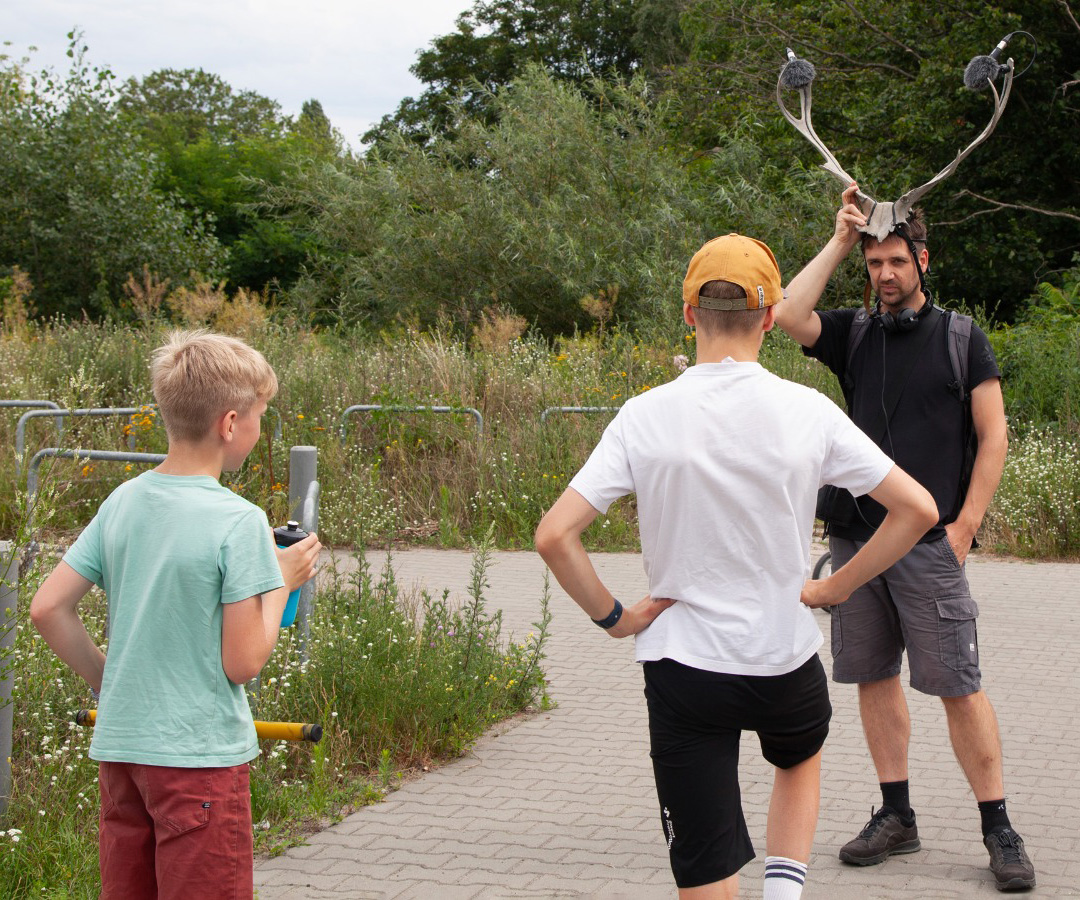
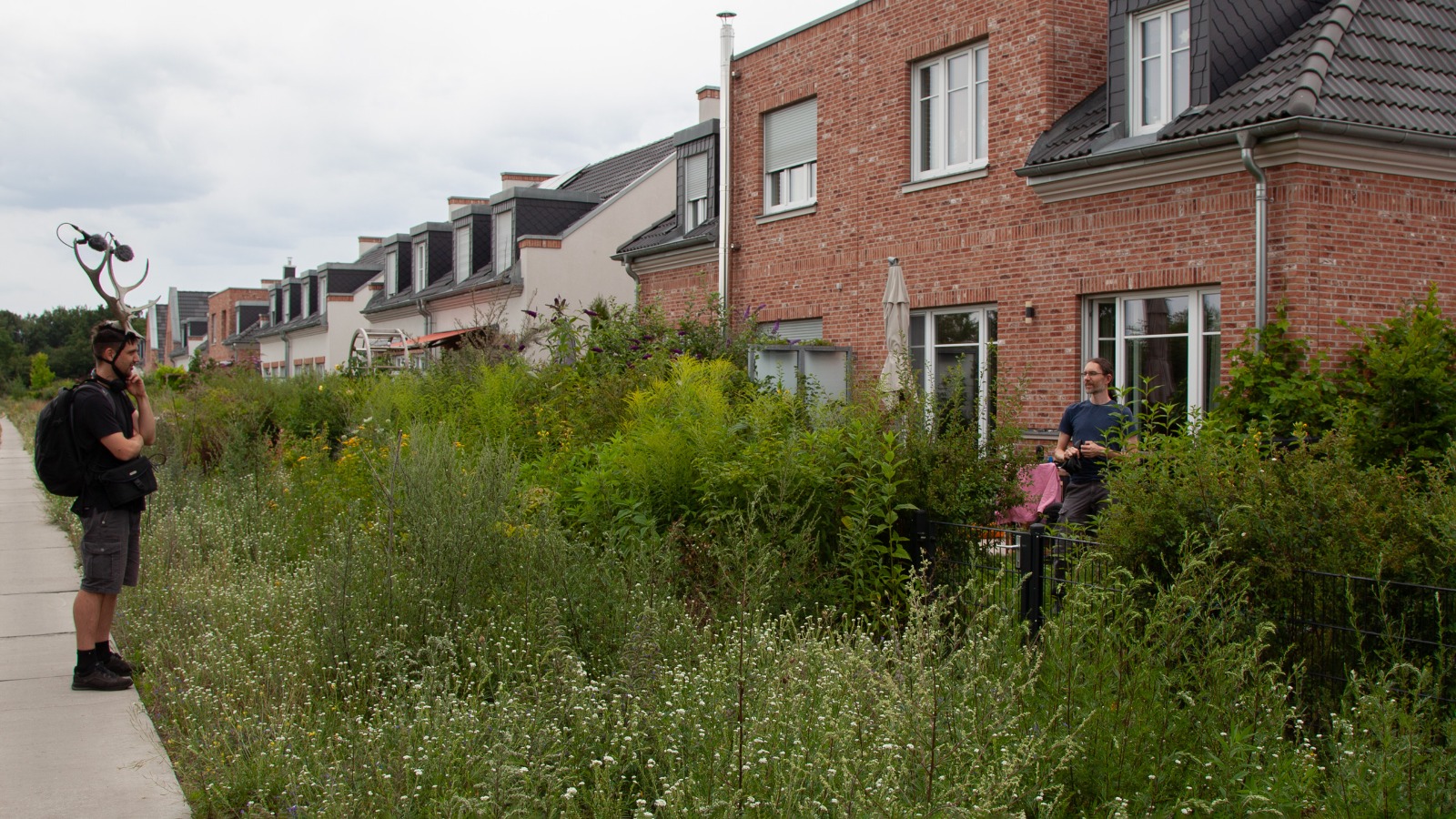
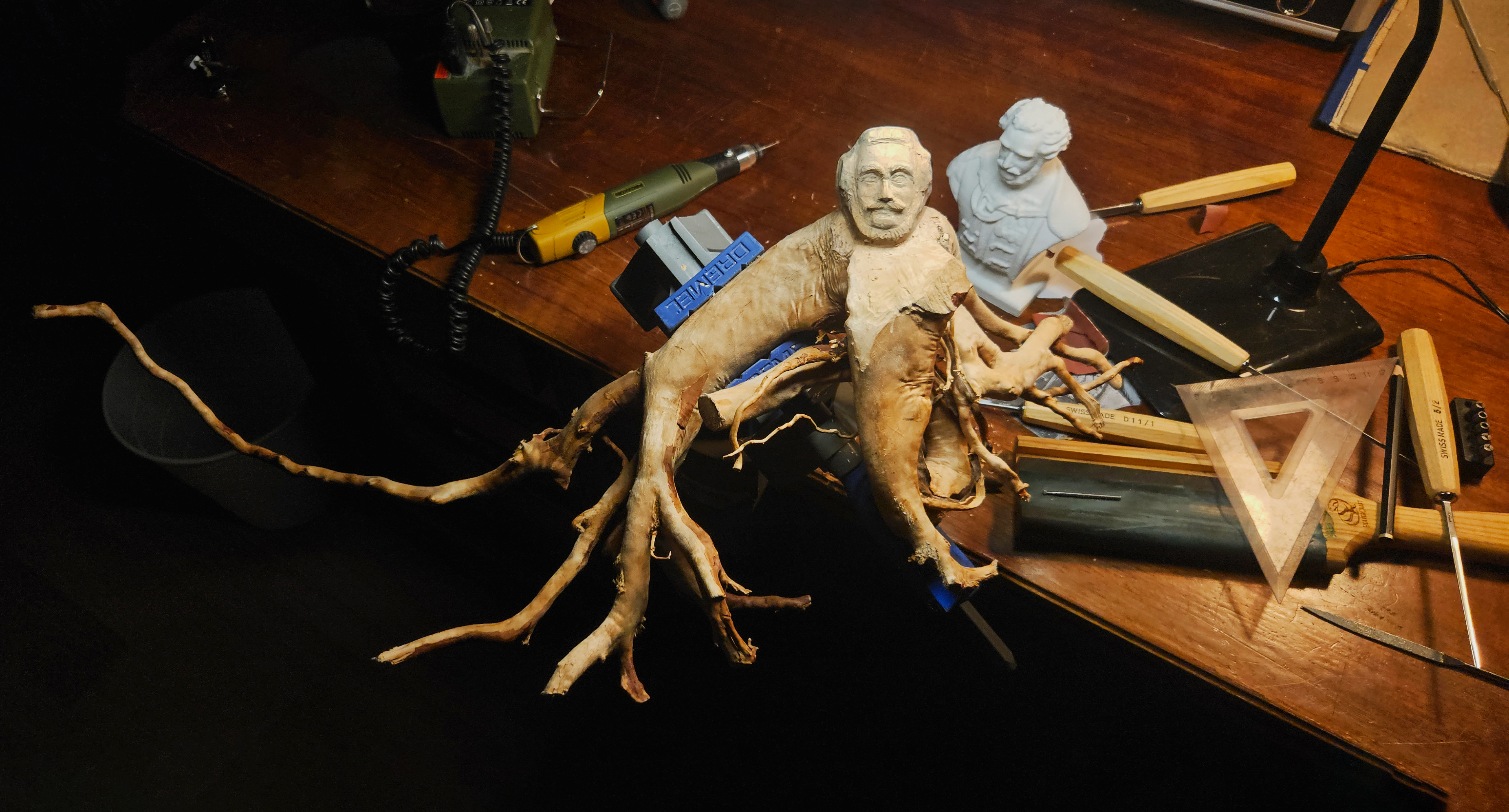
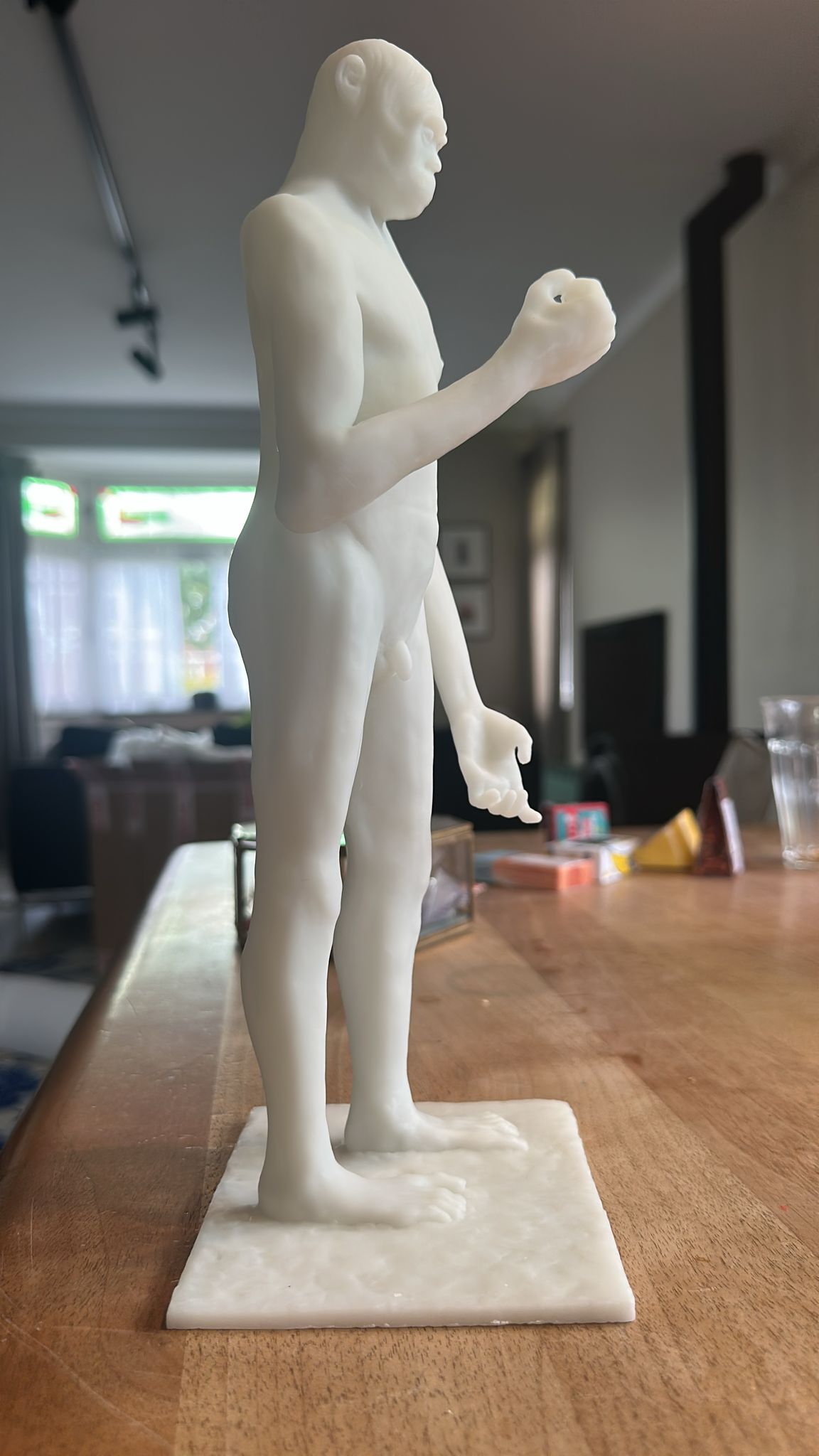
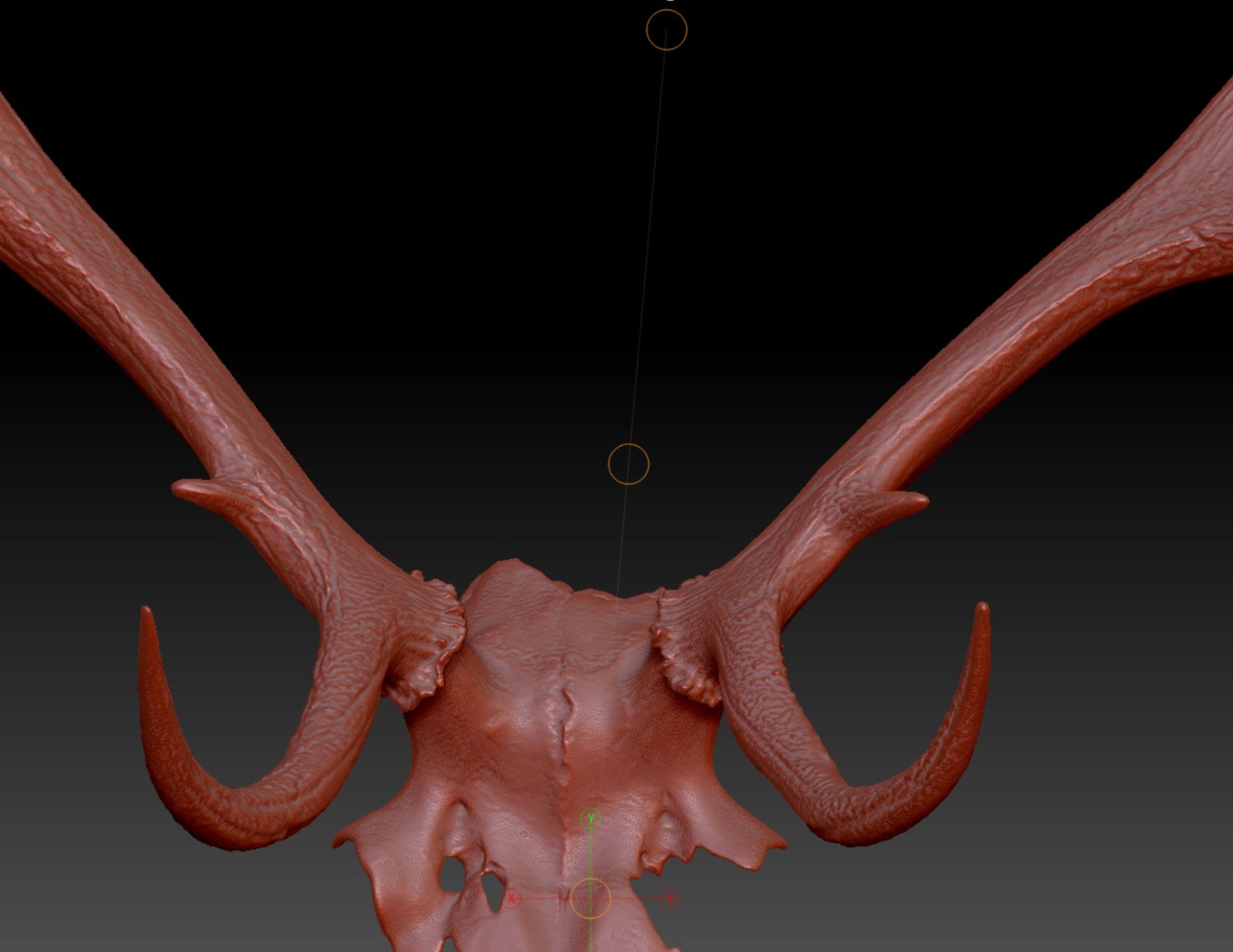
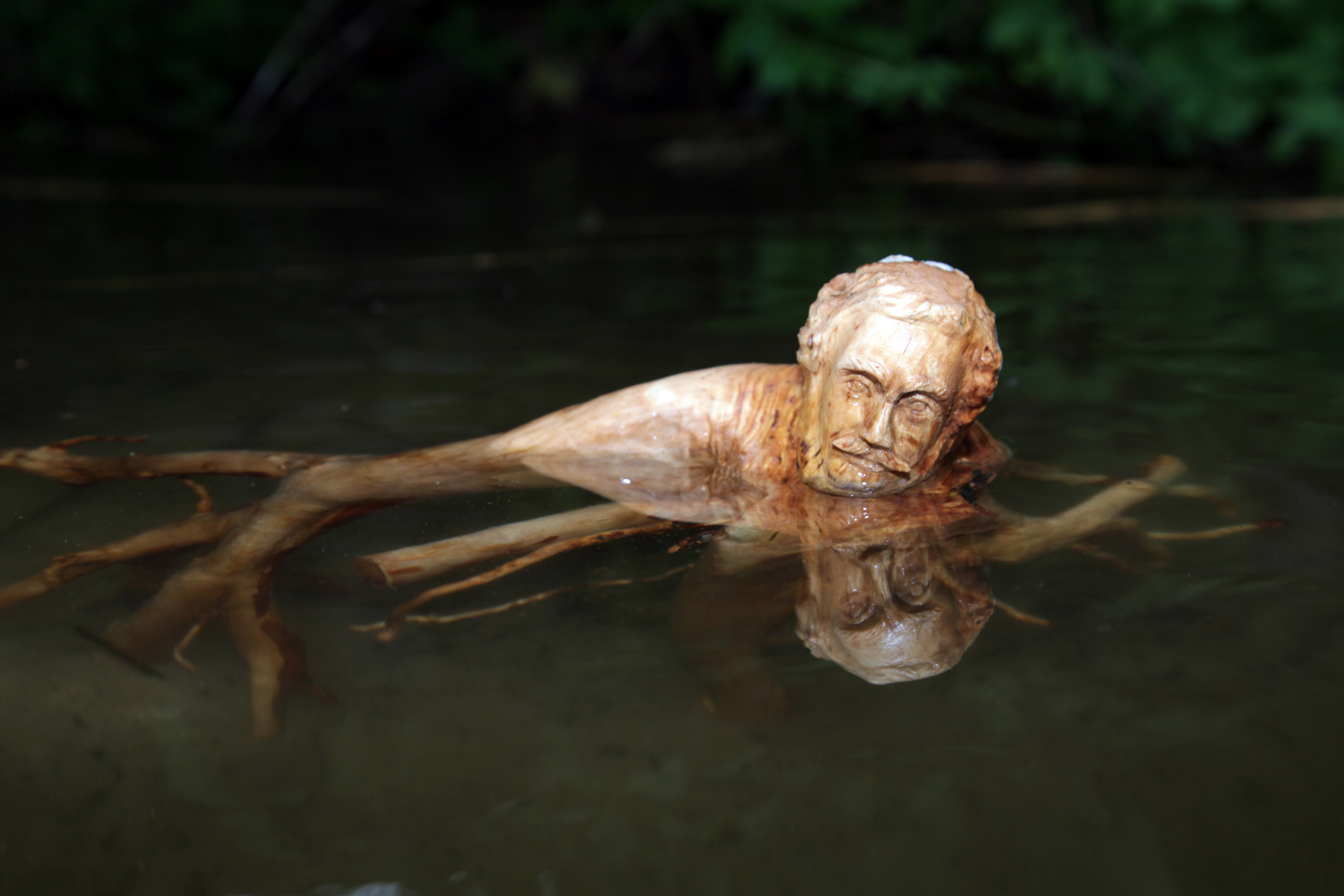
At the heart of The Giant’s Bones is a replica of a prehistoric human reconstruction made by Dubois in 1900. He named the figure Pieth and used it during the World Exhibition in Paris to present his scientific ideas to the public. Rather than treating the sculpture as a museum object, DTA reimagines it again as a catalyst for conversation: a figure through which people can encounter the past, question inherited narratives, and reflect on the possible return of the fossils. By bringing Pieth into public spaces, the project places Dubois’s legacy in the midst of contemporary society, inviting a range of voices into a debate that concerns us all.
Following an initial journey through the Netherlands where we trace Dubois’ own history, Pieth is intended to travel to Java. There, the project will open up conversations with people in Indonesia about the fossils, their histories, and the meaning of their return.
The voices gathered along the way will come together in an audio installation, premiering at Odapark in 2027.
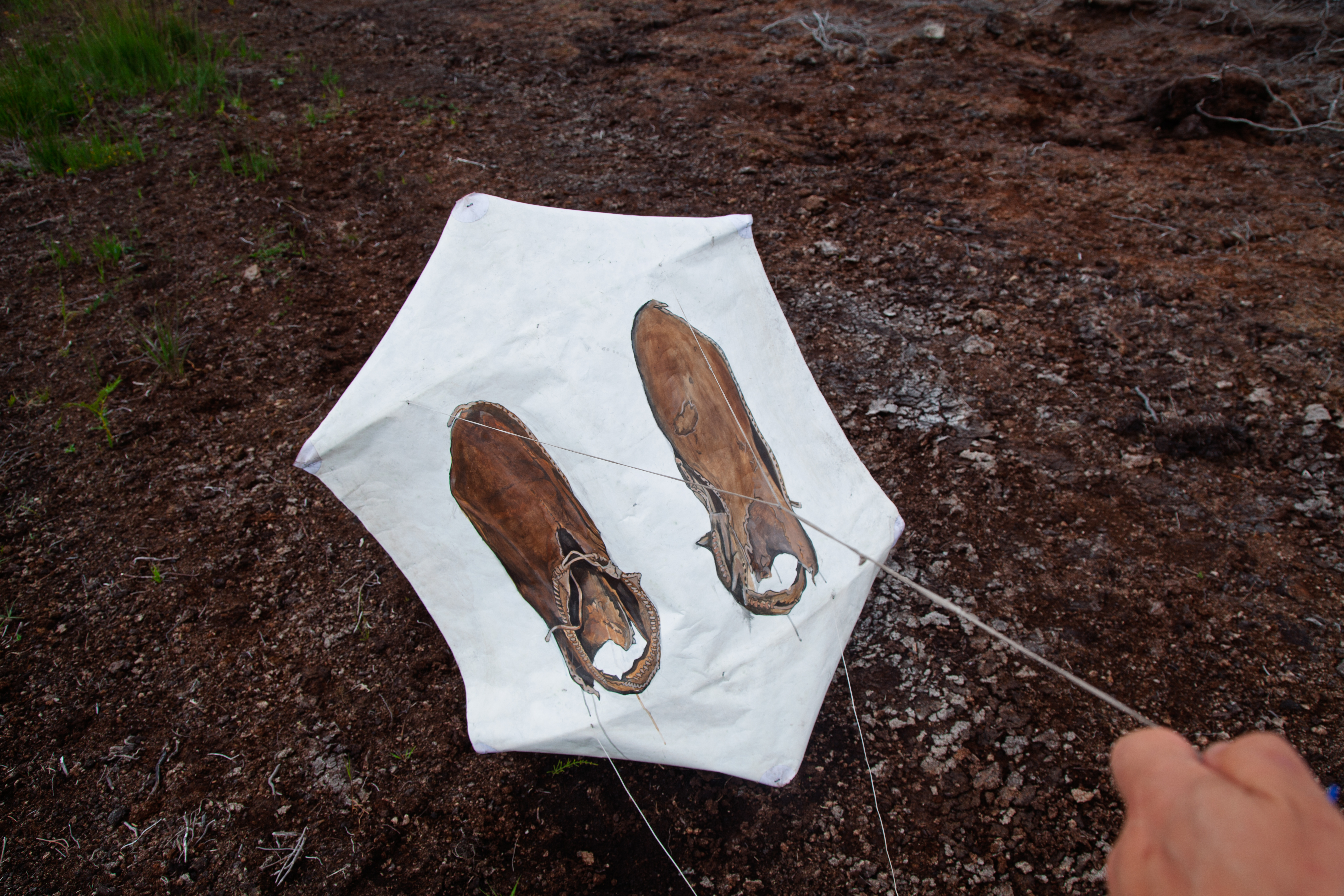
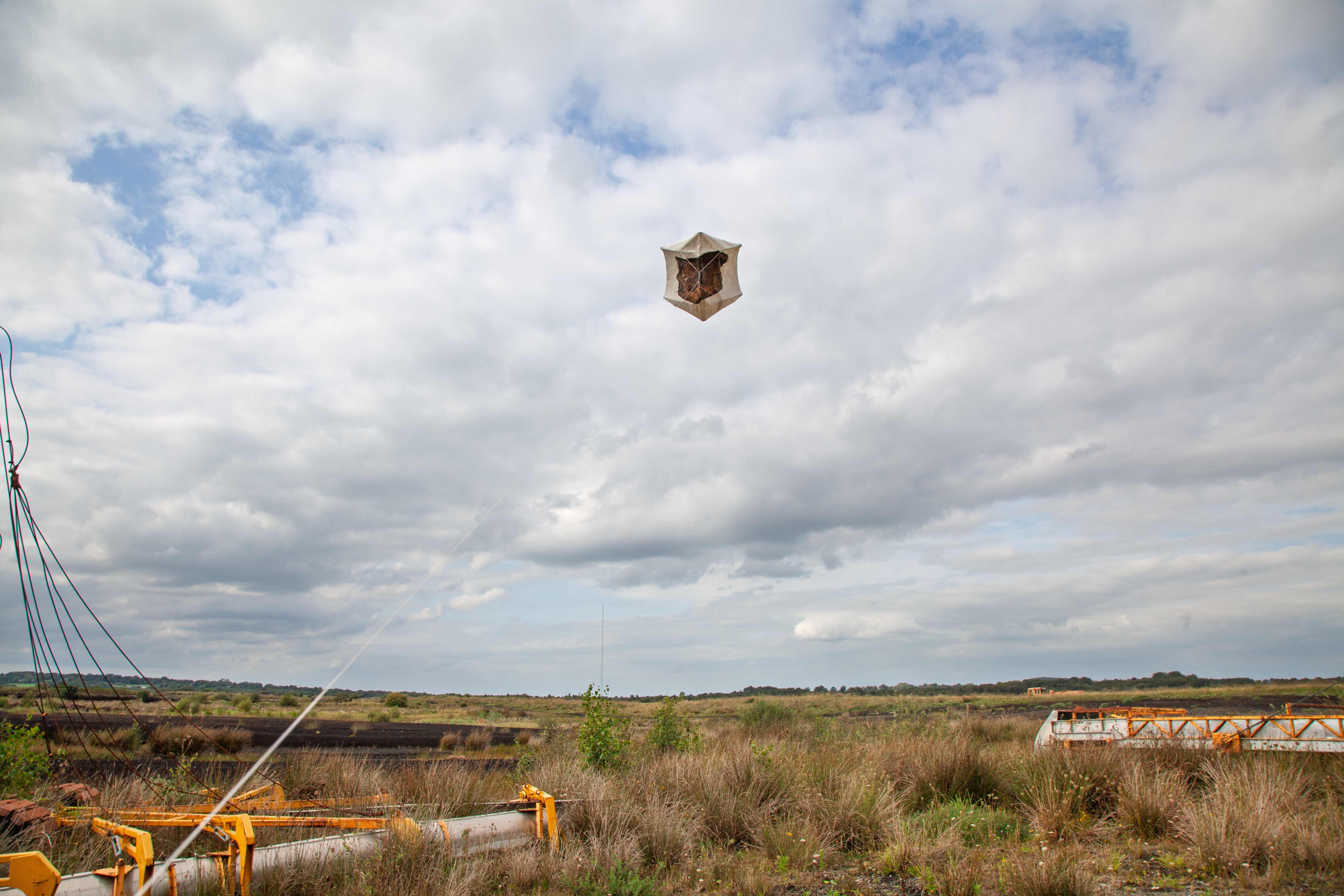
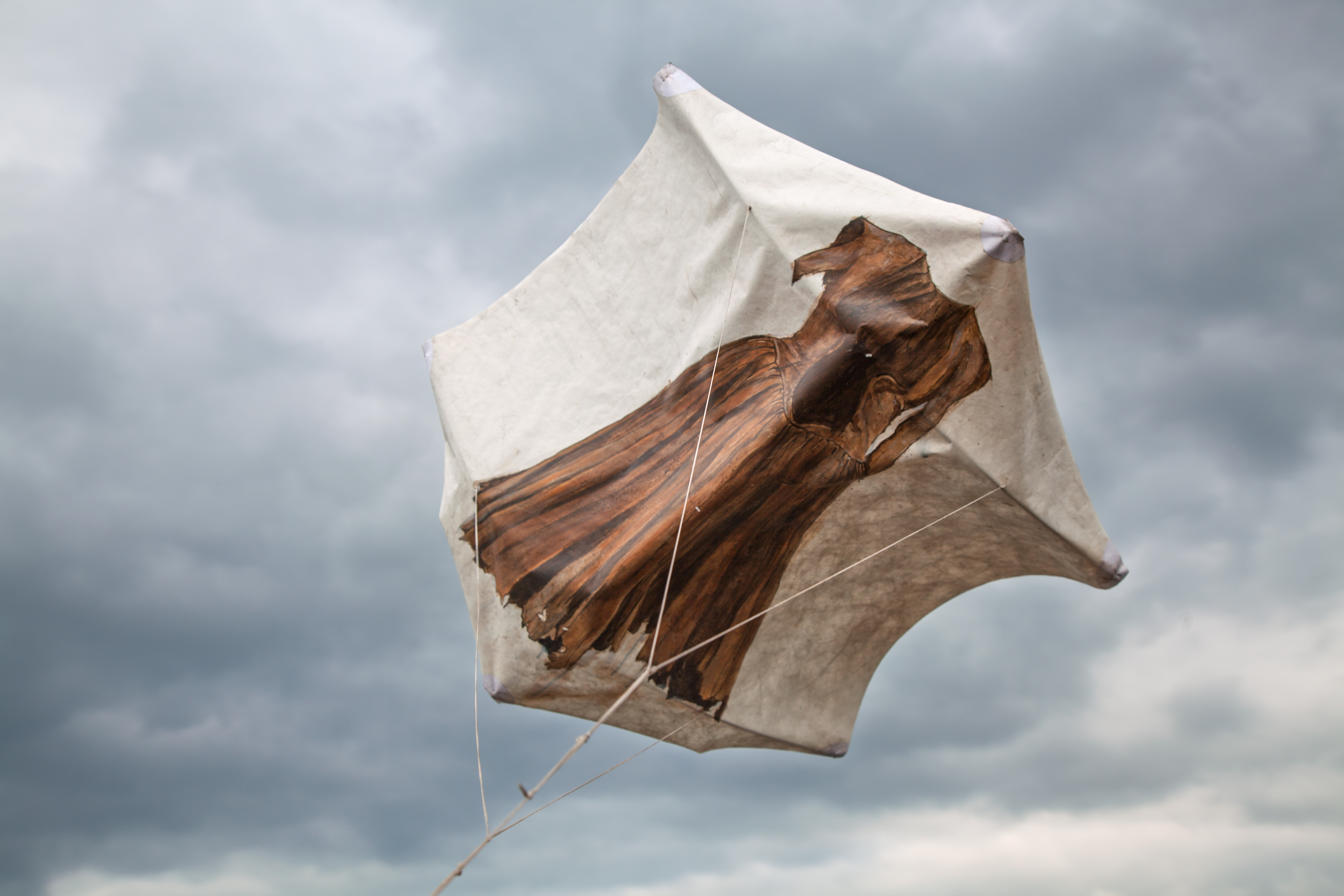
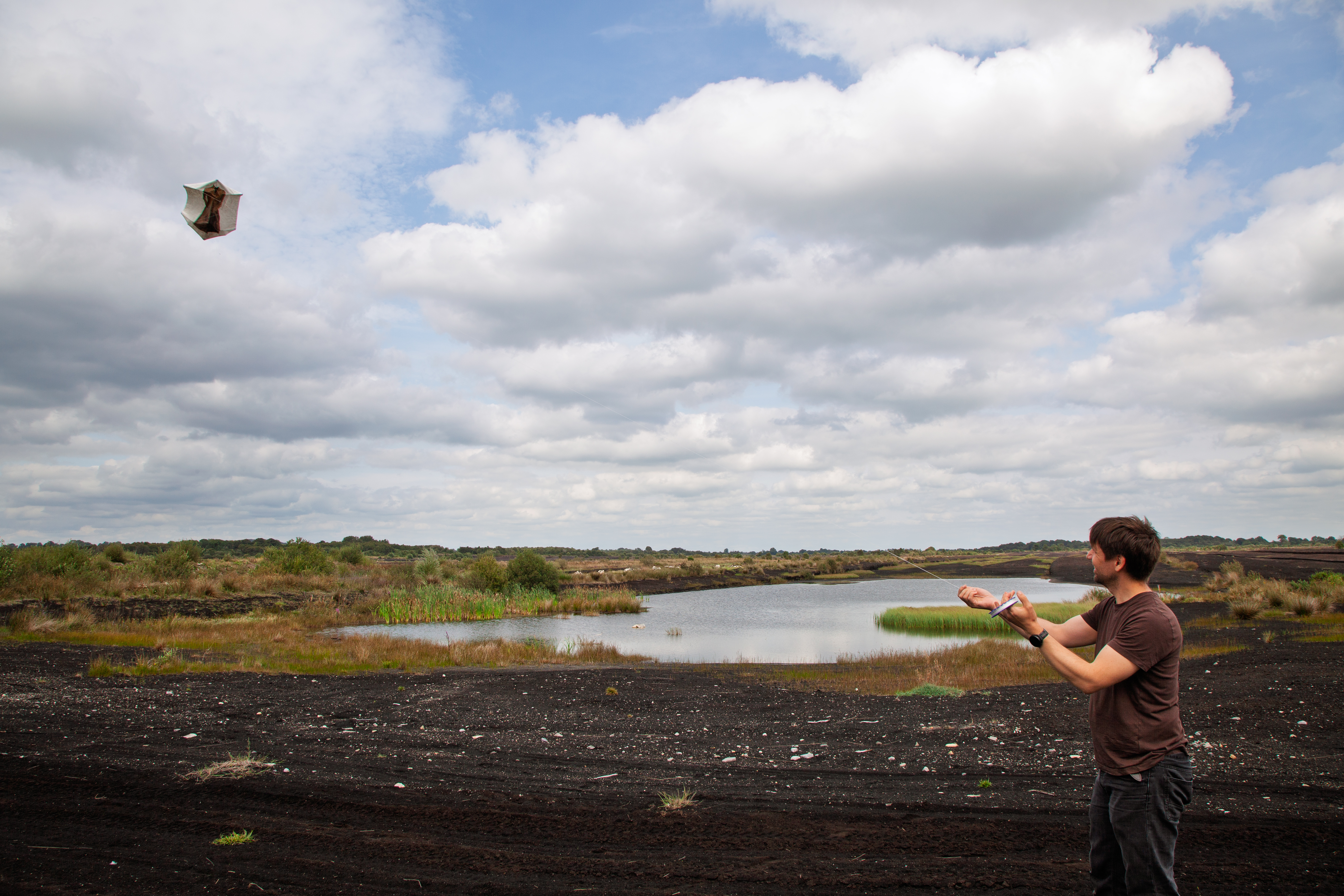
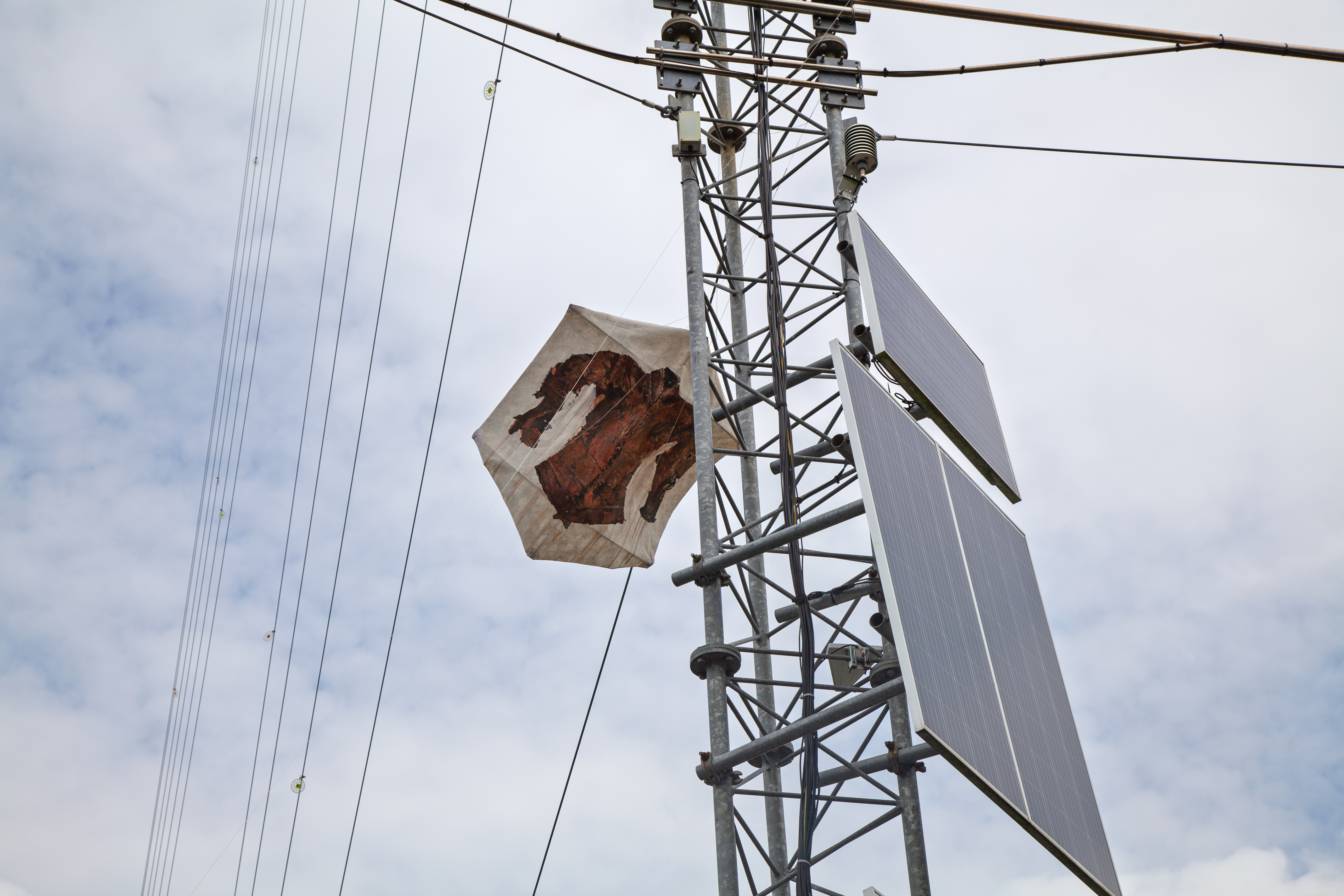
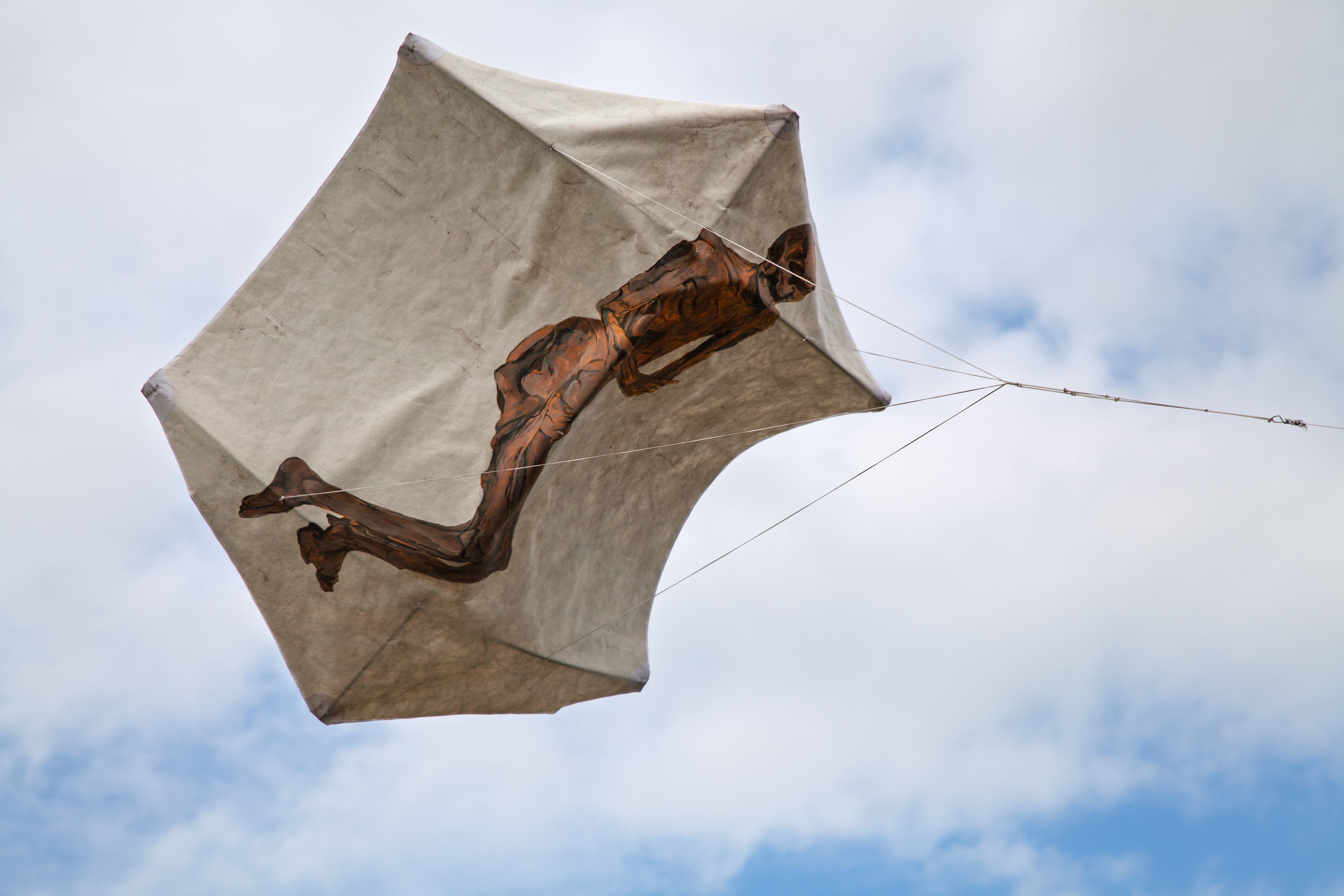
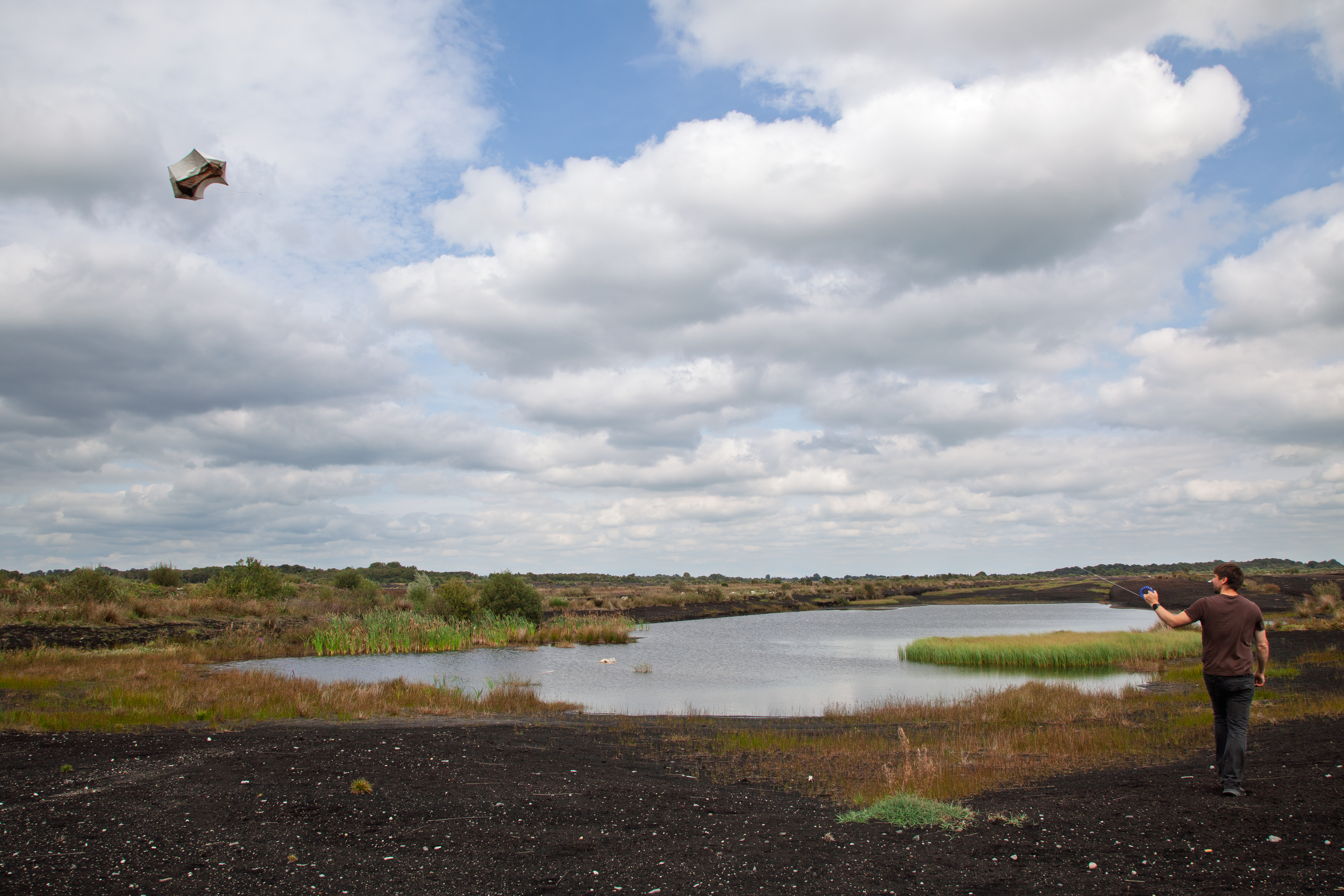
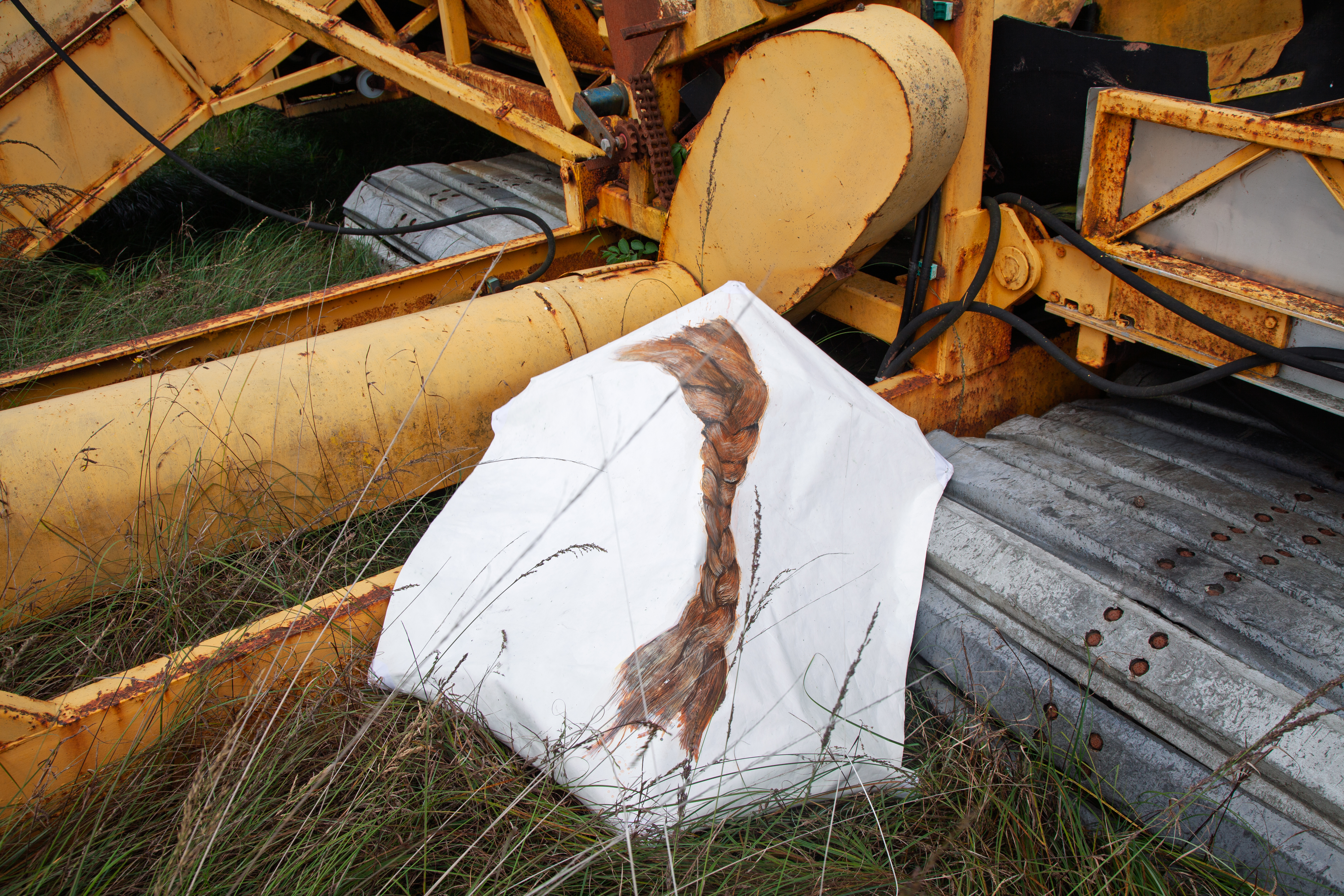
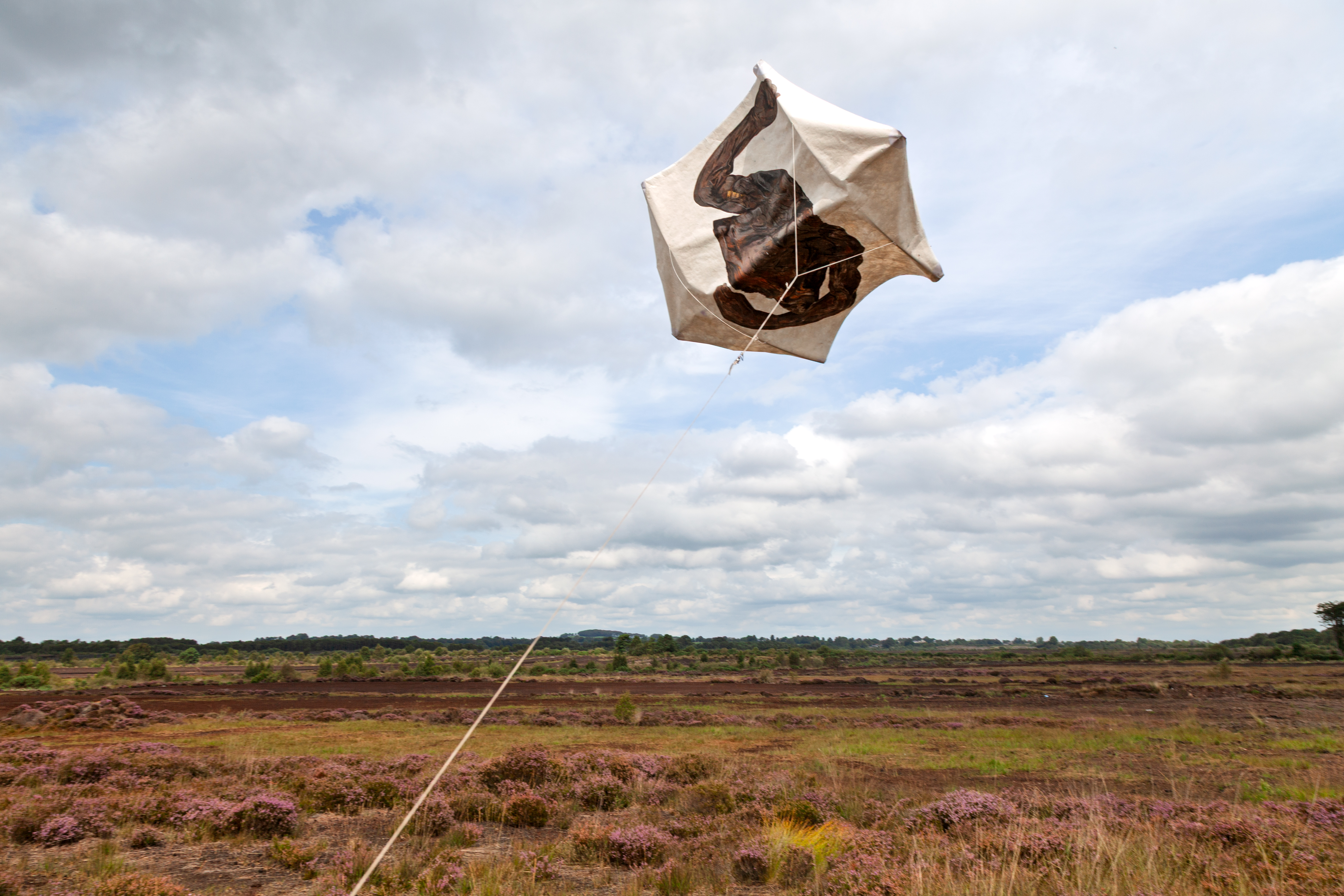
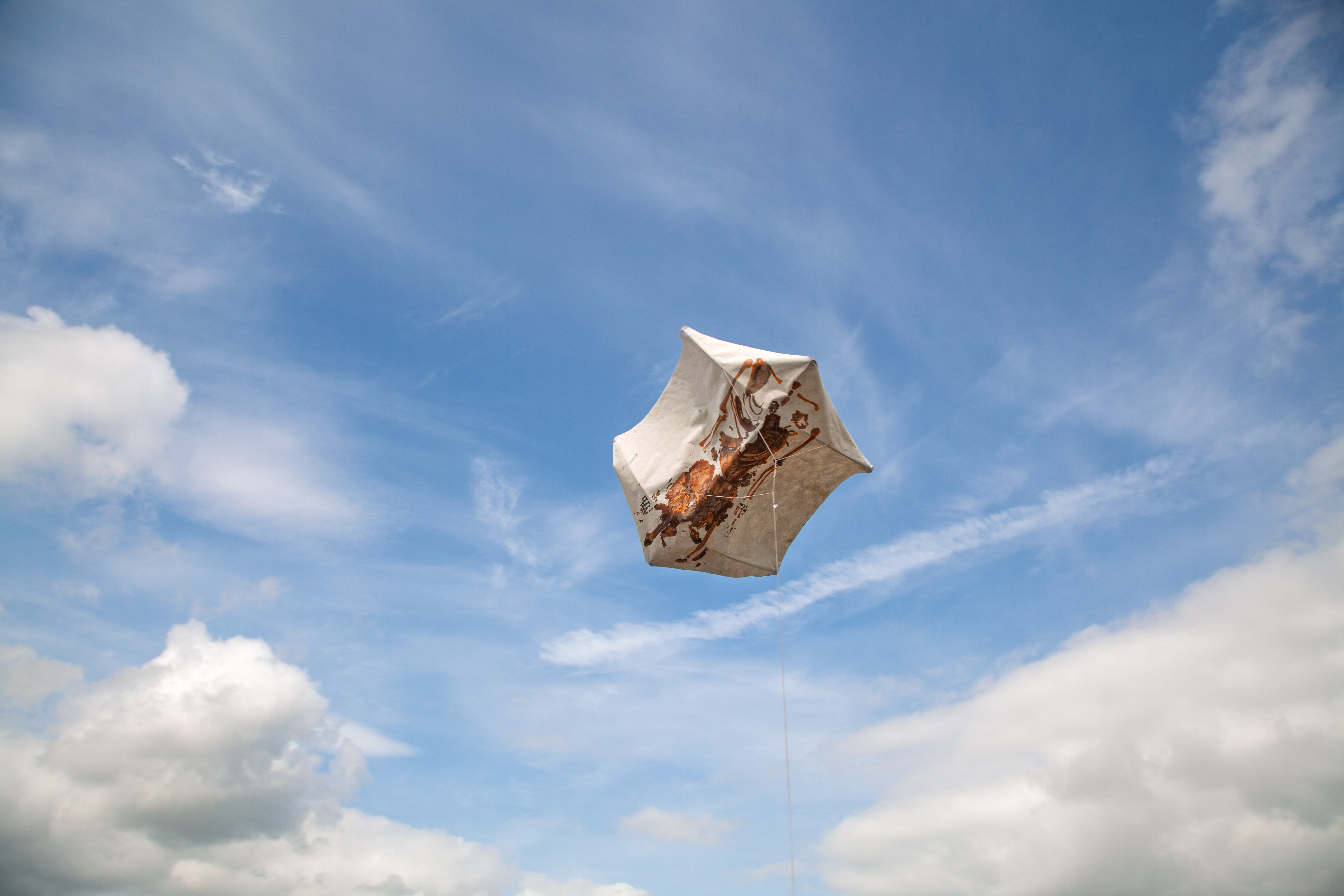
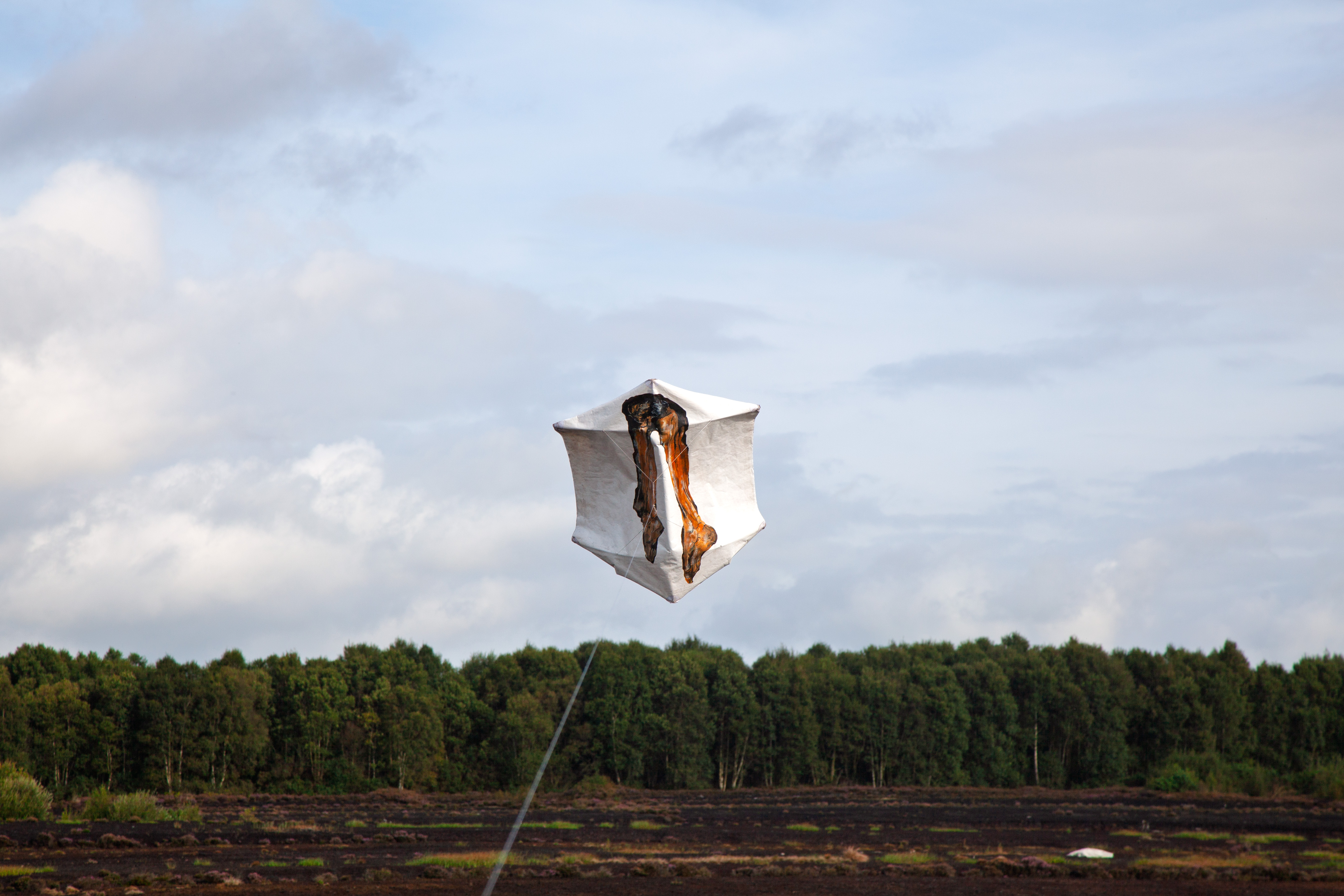
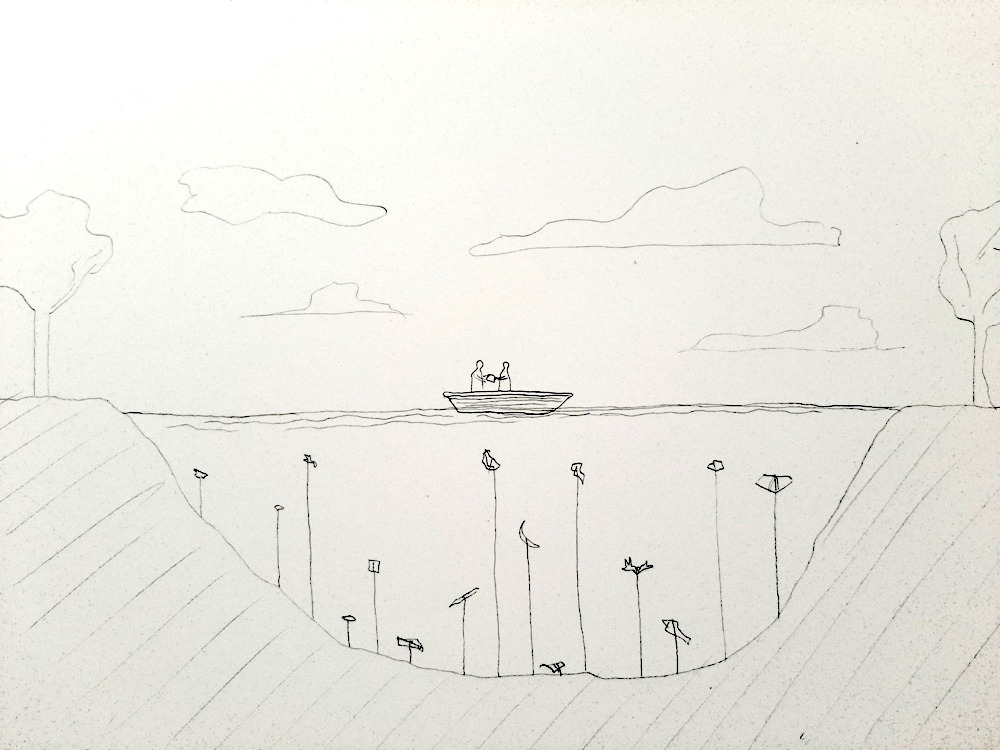
Archaeological paintings on the kites:
#1: Tumbeagh Bog Body (Pair of legs), Tumbeagh Bog, Lemanaghan, Co. Offaly, 2nd century BCE
#2: The Shinrone Gown (Woolen dress), Cangort Bog, Co. Offaly, 16th/17th century CE
#3: Manuscript, Faddan More, Co. Tipperary, 8th century CE
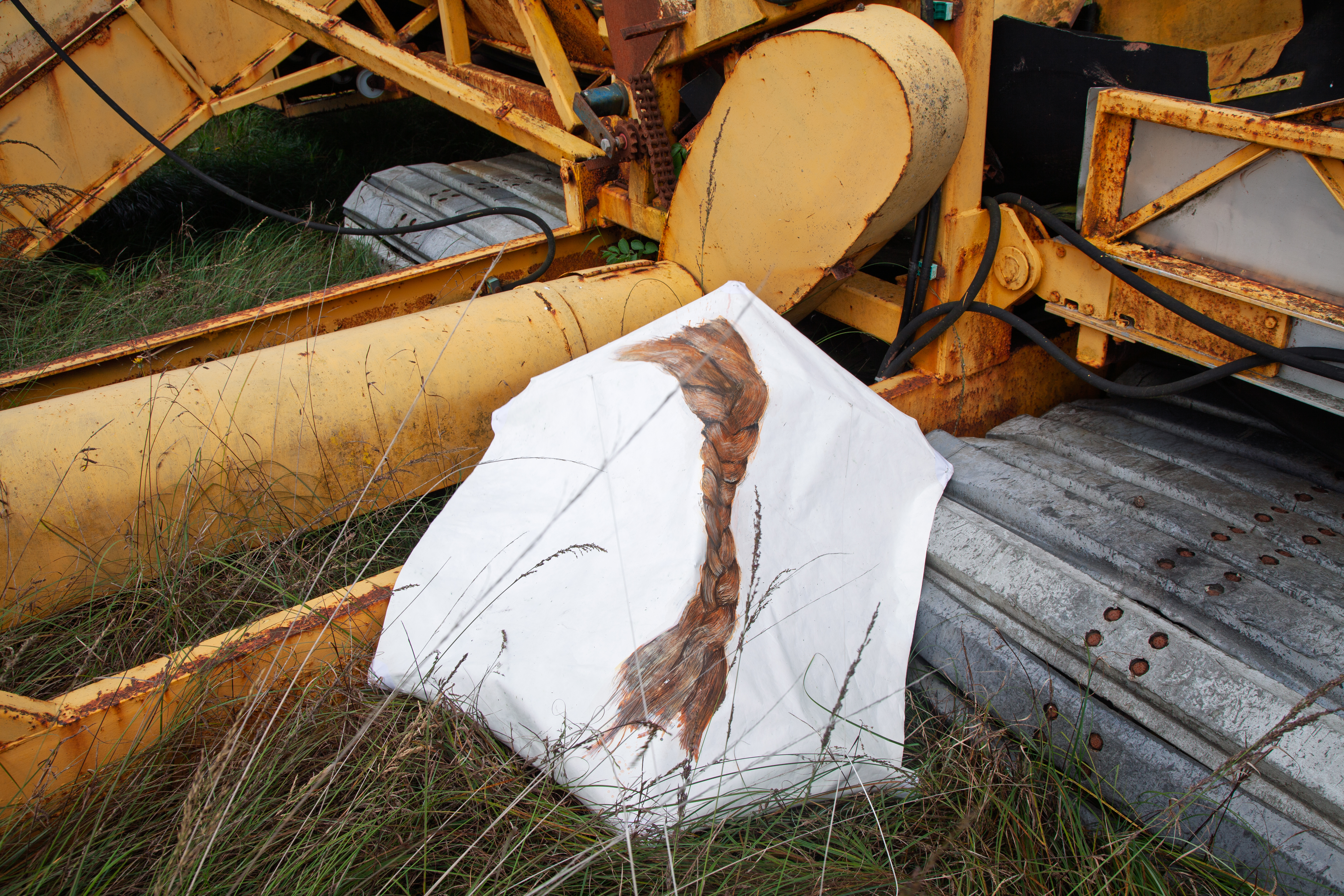
#4: Hair plait, Drumkeeragh, Co. Down, 16th century CE
#5: Woollen outfit, Killery Bog, Co. Sligo, 17th century CE
#6: Gallagh Man (Bog Body), Castleblakeney, Co. Galway, 3rd century BCE
#7: Suit, Kilcommon Bog, Thurles, Co. Tipperary, 17th century CE
#8: Leather shoe, Killaghintober Bog, Lemanaghan, Co. Offaly, 13th century CE
#9: Clonycavan Man (Bog Body), Clonycavan bog, Ballivor, Co. Meath, 3rd century BCE
#10: Leather Shoe, Annaholty Bog, Co. Tipperary, 11th century BCE
#11: Meenybraddan Woman (Bog Body), Meenybradden Bog, Ardara, Co. Donegal, 1100 CE
#12: Old Croghan Man (Bog Body), Croghan Hill, Daingean, Co. Offaly, 3rd century BCE
#13: Cashel Man (Bog Body), Cashel bog, Co. Laois, 20th century BCE
#14: Bellaghy Woman (Bog Body), Co. Londonderry, 5th century BCE
#15: The Dungiven Costume, Flanders Townland bog, Co. Londonderry, 16th century CE
08. Pilot Bog Guardians (2025)
Location: Lemanaghan Bog, Offaly, Ireland
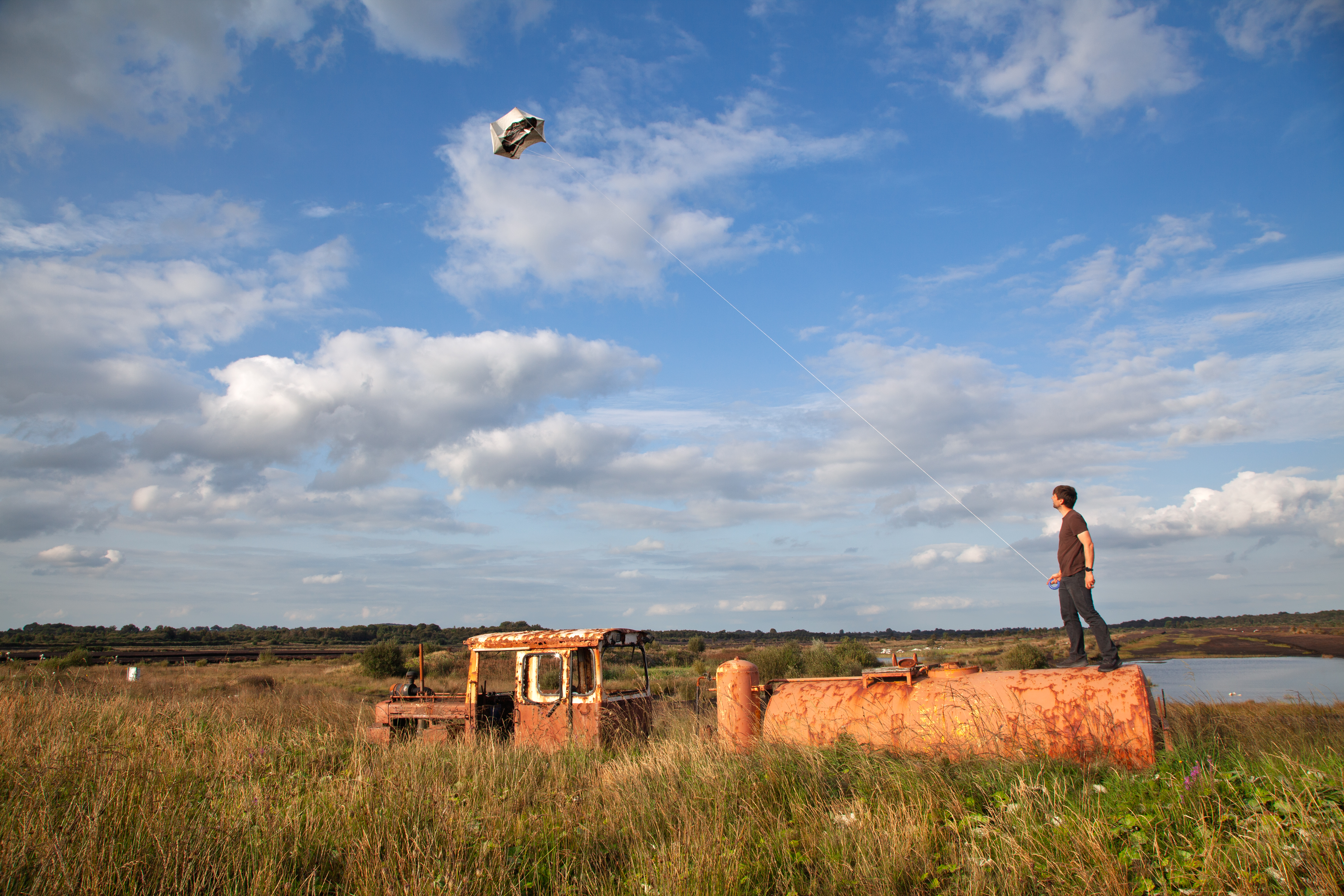
Kite flying, painting, photography, performative intervention
15 kites, (tyvek, flying line, spars, acrylic pain, 15 x 120 x 105cm)
Team: Deep Time Agency in collaboration with Ben Gearey (UCC), Aoife Phelan (Lemanaghan Bog Heritage and Conservation group, IPeAAT (Irish Peatland Archaeology Across Time) in collaboration with UCC and the National Heritage Week in Ireland.
Thanks to archaeologist Ben Gearey of the UCC and to the members of the Lemanaghan Heritage and Conservation Group.
Generously funded by Iona Stichting & UCC
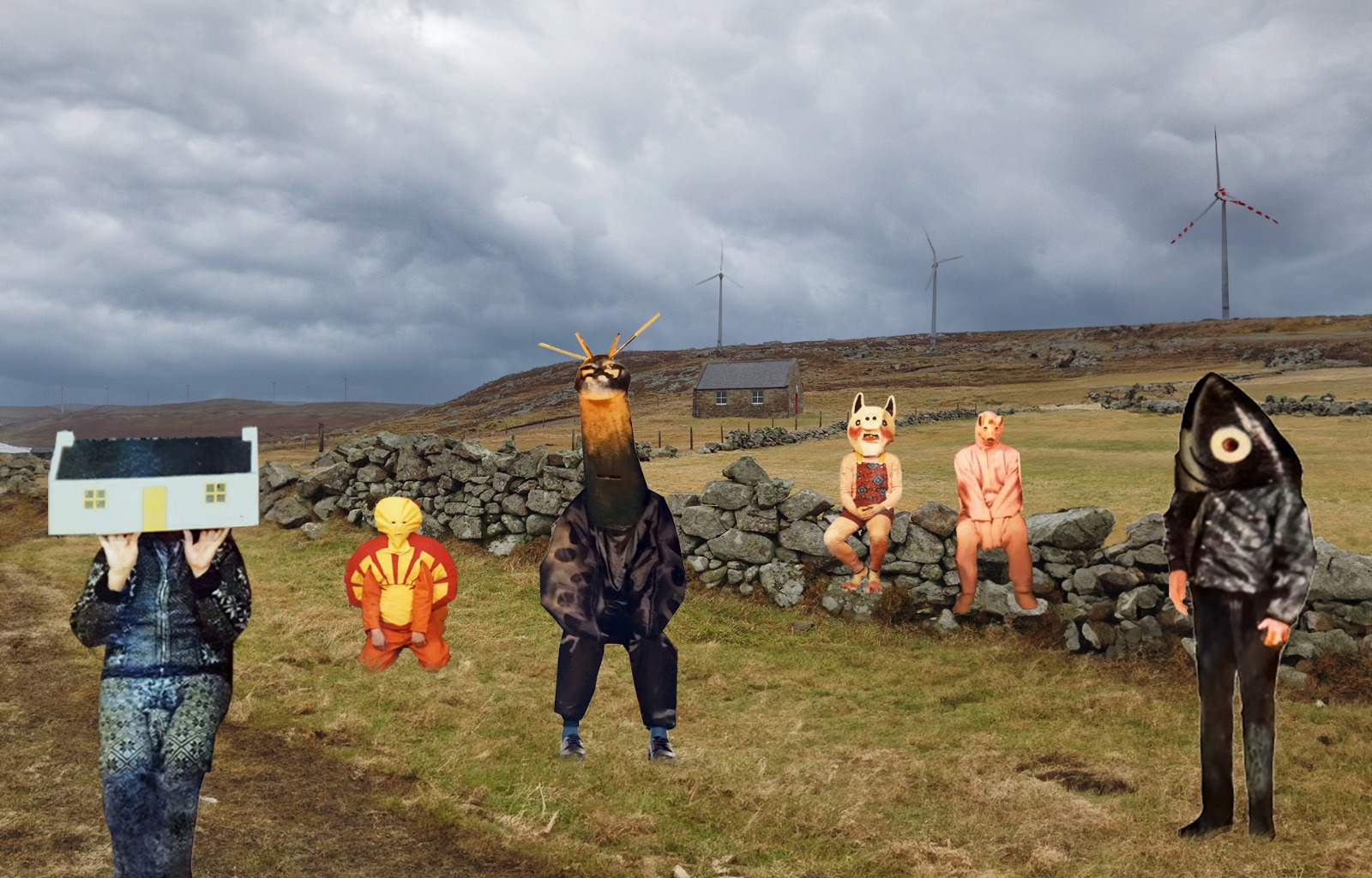
Bog Guardians reacts to the building of a planned wind farm in a bog landscape, resulting in considerable protest from local heritage and wildlife conservation groups.
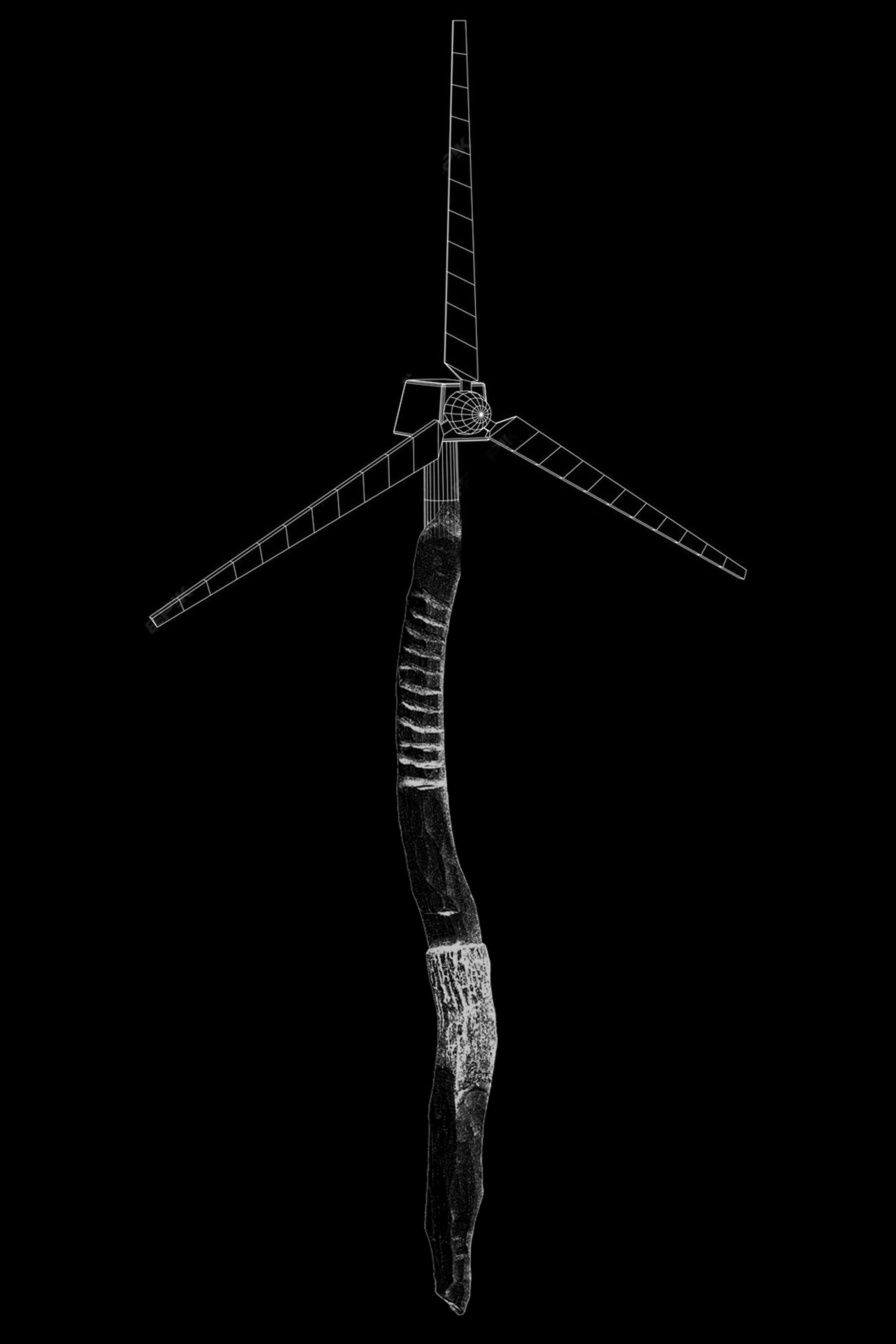
The industrial development, currently in the pre-planning stage, is executed by the former peat extraction company Bord na Móna (BnM). The company has rebranded itself as a renewable energy provider, building wind turbines and solar farms on its former peat excavation sites. For Lemanaghan, they envision the installation of 15 wind turbines total, each with a height of up to 220 meters, sufficient to power approximately 55,000 Irish homes annually.
Location: Lemanaghan Bog, Offaly, Ireland
Kite flying, painting, photography, performative intervention
15 kites, (tyvek, flying line, spars, acrylic pain, 15 x 120 x 105cm)
Team: Deep Time Agency in collaboration with Ben Gearey (UCC), Aoife Phelan (Lemanaghan Bog Heritage and Conservation group, IPeAAT (Irish Peatland Archaeology Across Time) in collaboration with UCC and the National Heritage Week in Ireland.
Thanks to archaeologist Ben Gearey of the UCC and to the members of the Lemanaghan Heritage and Conservation Group.
Generously funded by Iona Stichting & UCC
Bog Guardians reacts to the building of a planned wind farm in a bog landscape, resulting in considerable protest from local heritage and wildlife conservation groups.
The industrial development, currently in the pre-planning stage, is executed by the former peat extraction company Bord na Móna (BnM). The company has rebranded itself as a renewable energy provider, building wind turbines and solar farms on its former peat excavation sites. For Lemanaghan, they envision the installation of 15 wind turbines total, each with a height of up to 220 meters, sufficient to power approximately 55,000 Irish homes annually.